
We know when planning our Italy road trip, choosing which route to take can be difficult.
The choices of what to see and do can make planning the road trip an interesting exercise.
So, if you are looking for some travel destinations to spend your time, then this road trip of northern Italy will have you wanting to visit and explore.
We have put together an overview of some places to inspire you when planning your Italy road trip.
Best Places and Foods on a Road Trip to Northern Italy
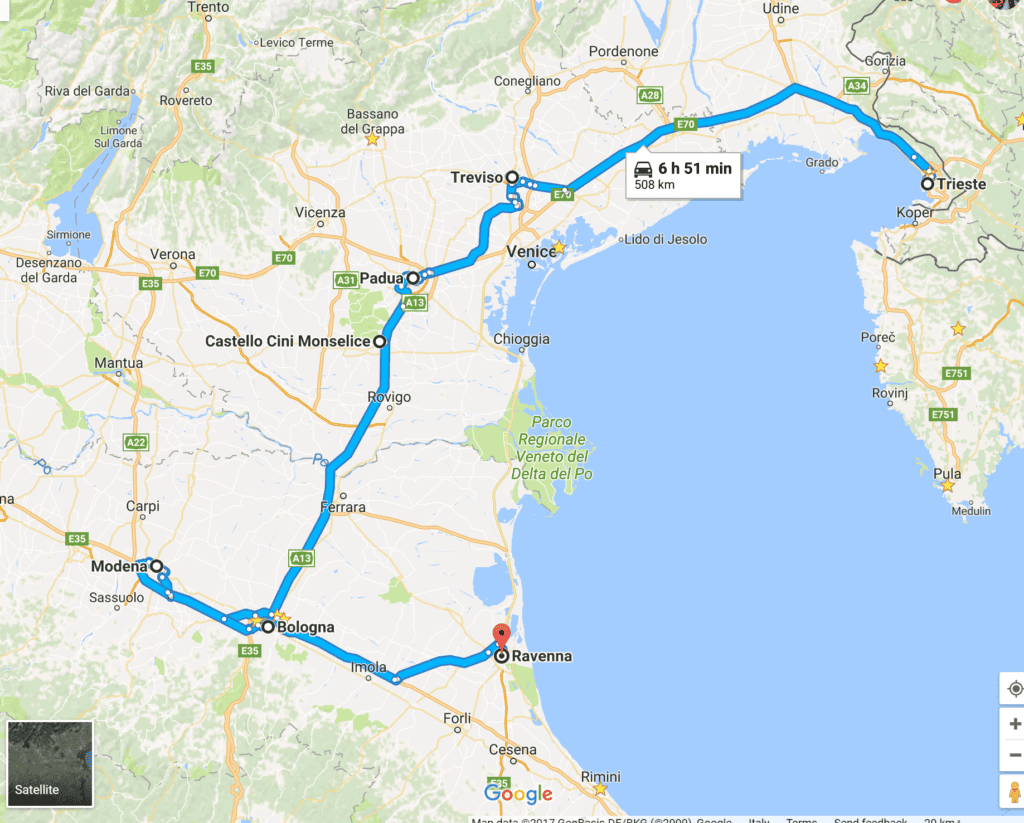
The weather in September is still warm and the crowds have thinned. We were excited to visit these cities, not only for history but for the food experiences as well.
How to Travel Northern Italy
Italy has 20 regions, with eight regions making up northern Italy. It is made up of mountainous coastal areas, waterways, and historical cities.
Our road trip would include six of the eight regions of northern Italy:
- Aosta Valley (we travelled through to Mont Blanc)
- Piedmont
- Liguria
- Lombardy
- Emilia-Romagna
- Veneto
- Friuli-Venezia Giulia
- Trentino-Alto Adige/Sudtirol (still on the list for us)
Travelling by car is one of the easiest ways to explore northern Italy. Otherwise, trains in Italy are efficient and reasonably priced.
Road Trip Italy – Travelling Tips
Autostrada tolls are on the high side in northern Italy
At various sections of the autostrada, you will find toll booths accepting payment by cash or credit card.
However, be prepared to encounter lots of heavy haulage trucks.
And you’ll need to be aware of the Italian drivers with a need for speed. They also like to cuddle up with you in the lane until they decide which lane they want to be in.
Secondary roads are the alternative
They are single-lane but are often congested when travelling at 70km and 50km through the small towns. These secondary roads are not well maintained and can make your trip a lot slower.
Fuel prices are higher in Italy
In Italy, in comparison to Spain and Germany, fuel is more expensive. And at the autostrada fuel stops, it can sometimes be 20c higher.
Be aware of small fuel stops in villages if a local attendant helps you. It may cost you 20c more per litre in fuel. So make sure you are holding the pump nozzle.
The beauty of Trieste (Friuli-Venezia Giulia)
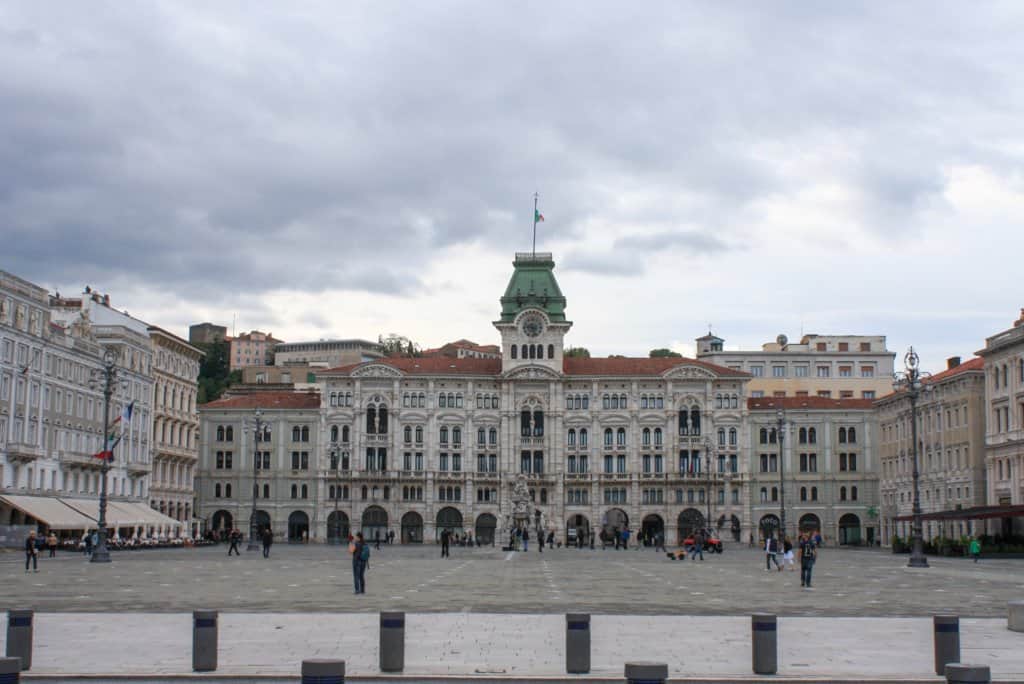
This city has always been a place of interest from reading historical stories of the Austro-Hungarian period when at school. Trieste sits on the Adriatic coast and is a prosperous seaport in the Mediterranean region.
While you do find the remains of the Roman period, it is the beauty of the buildings in the Piazza Unita d’Italia which will have you spellbound.
Click here to learn more about planning your One Day in Trieste.
Trieste is unique with its many churches of Greek-Orthodox, Serbian-Orthodox, Synagogue, and Catholic.
From the Catholic Cathedral of San Giusto, you have spectacular views of Trieste and the harbour.
Piazza Ponterosso has views of two churches, San Spiridione and San Antonio, along the Canal Grande lined with small boats of Trieste.
Walk the Canals of Treviso (Veneto)
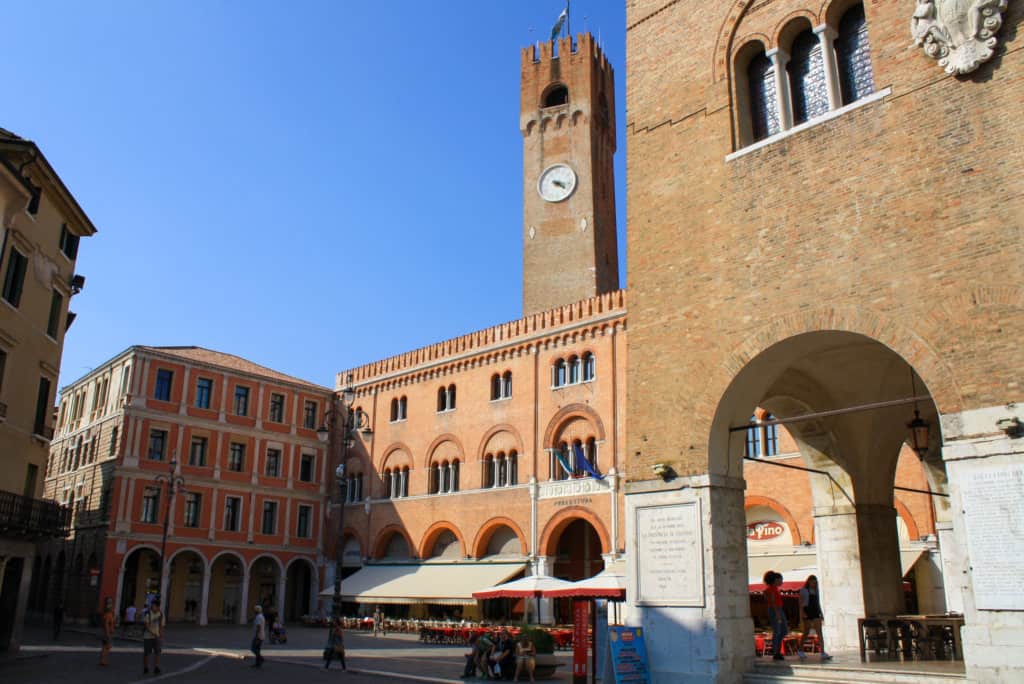
If you arrive from Slovenia, stay awhile at Treviso. While Treviso may not be the tourist mecca like nearby Venice and Verona, you can spend an afternoon exploring its canals and cobblestoned streets.
The highlight was the historic town hall Palazzo dei Trecento (built-in 1210), a prominent building in the Piazza dei Signori. A perfect place to enjoy a coffee or a wine in one of the several cafes that line the Piazza.
It is easy to imagine the bustle of the medieval town all those centuries ago.
Treviso is also the home of well-known brands like Benetton, Diadora, and De’Longhi, which have their headquarters here. But what piqued our interest, Treviso is also the area for the original production of Prosecco wine (always a favourite) and the dessert Tiramisu (Maura’s favourite).
We also loved the many various art forms and some delicious homemade gelato.
Find the Spires of Padua (Veneto)
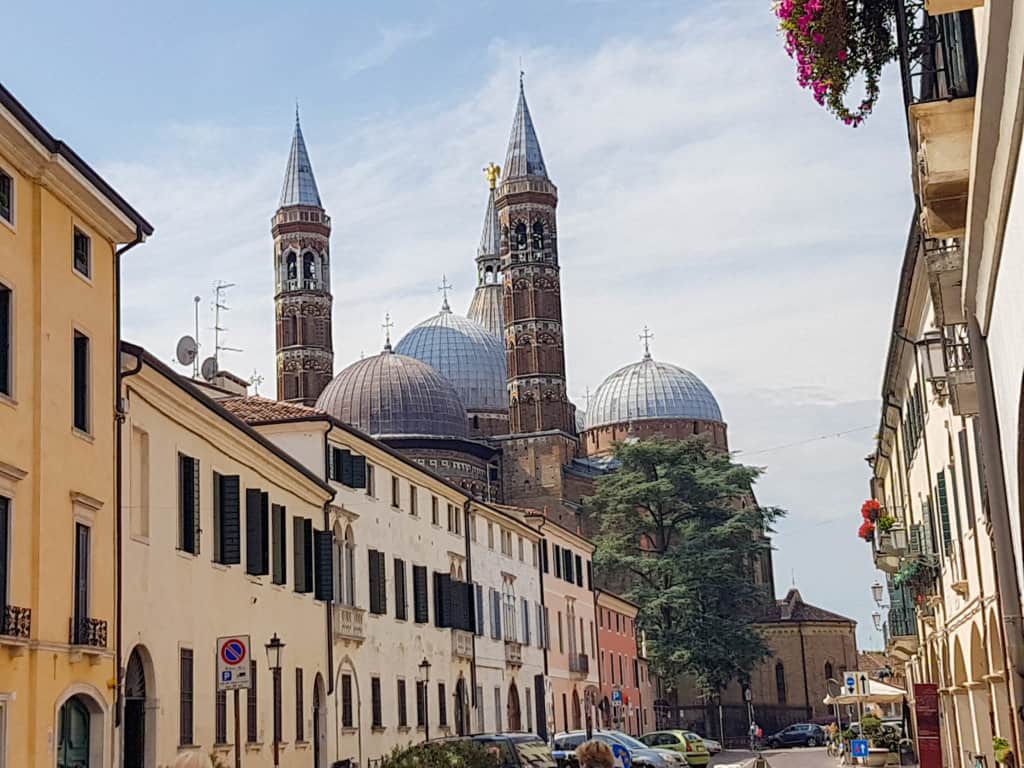
Arriving at our Airbnb, we knew we were in the Veneto region when we viewed the minaret-shaped spires of the local church.
Padua architecture will have you looking up at the overhanging porticos as you walk along narrow cobblestoned streets. The vibrancy you feel is likely due to the students of the University of Padua – it’s Italy’s second-oldest university, founded in 1222.
The most impressive highlight for us was turning the corner via M. Cesaroti and seeing the Basilica of St Anthony. It was the Byzantine Domes and Turkish Minarets catching our attention.
Padua Botanic Gardens are found near the Basilica of St Anthony – the first-ever botanic garden in the world (established in 1545) and now a UNESCO site.
Prato della Valle, at 80,000 square meters, is the largest square in Italy and one of the largest in Europe. The square was once a Roman theatre, but in 1775 was changed to a Plaza with a statue-lined canal.
This area is the place for festivals and markets near one of the old city gates.
Look up at the Beauty of Ravenna (Emilia Romagna)
Our visit to Ravenna wasn’t planned until our eldest son Richard said we had to visit. We added it to our itinerary and were so pleased we took his advice.
Ravenna was the capital of the western Roman empire from 402AD and then the Byzantine capital in the 5th-6th centuries. Behind the old city walls, not only are there eight UNESCO-listed buildings, but you will also find the tombs of Dante, the poet and Theodoric, King of the Goths.
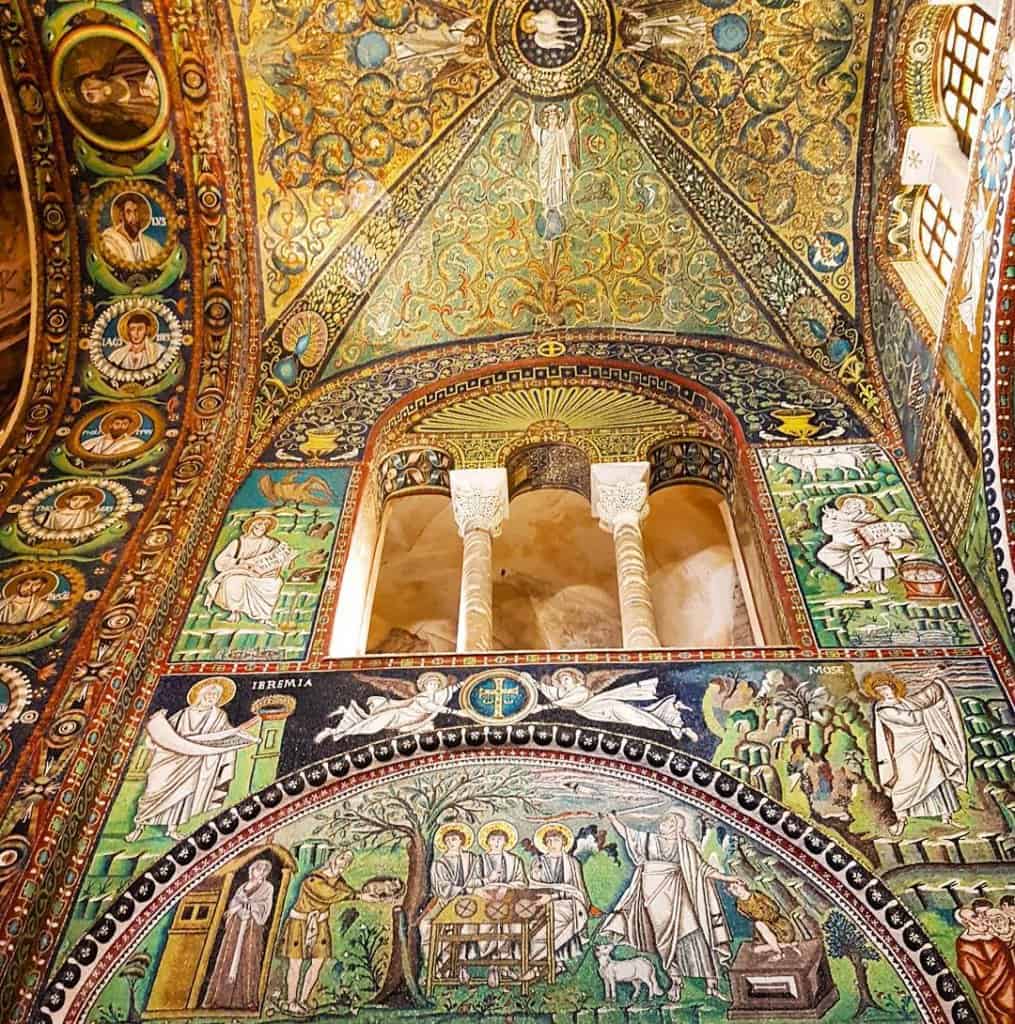
We had heard the mosaics found in the city were special, but we were unprepared for the beauty we saw. Our first stop was the Mausoleum of Galla Placidia, small but nice, but it was the Basilica di San Vitale that had us standing still, heads up and taking in the beauty of the mosaic depictions.
Can you believe these mosaics are nearly 1500 years old?
The Basilica of San Vitale in Ravenna, Italy, was completed in the year 548. The mosaics completely cover the walls and ceilings of the church. The colours are so vibrant, they really have the wow factor. Even if you have already seen many churches in Europe, it is so worth visiting.
Our tickets of €9.50 each gave us entry to 5 places of interest:
- Mausoleum of Galla Placidia
- Basilica di San Vitale
- Basilica di Sant’Apollinare Nuovo
- Battistero Neoniano
- Museo Arcivescovile e Cappella di Sant’Andrea
Basilica di Sant’Apollinare Nuovo again had us taking a seat to view and take in the story depicted in the mosaics.
As you may have guessed, we spent a lot longer than anticipated enjoying all the mosaic artwork of the 5th-8th centuries. Incredible craftsmanship in such detail makes this city is a must-see.
Here’s a link to Ravenna Tourism.
Climb the Tower of Bologna (Emilia Romagna)
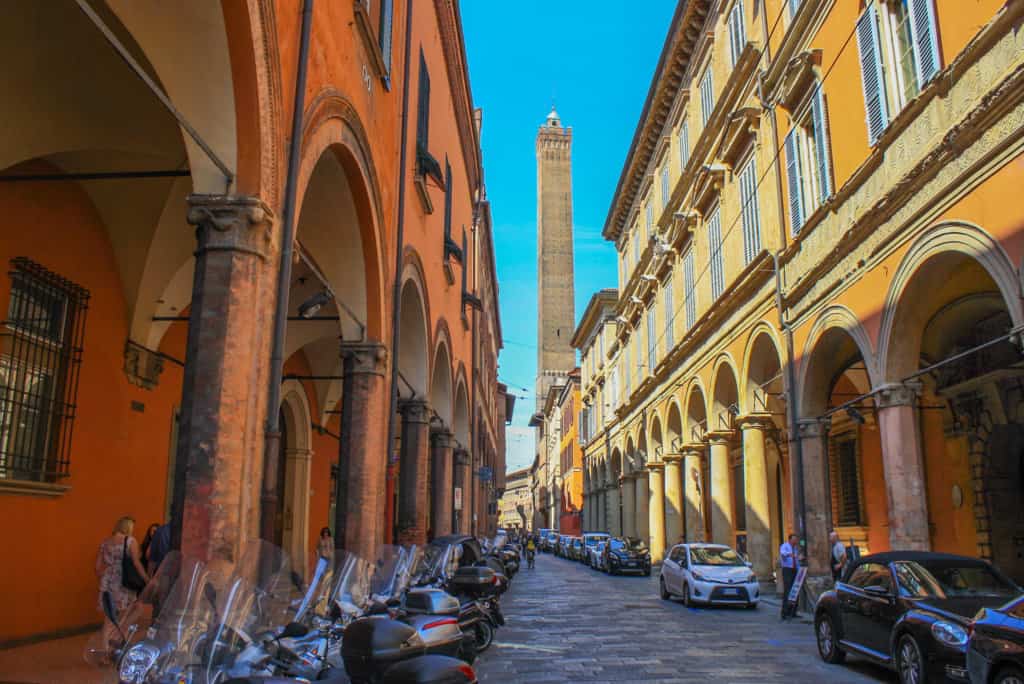
If you love spaghetti bolognese, then you have found your city to try the authentic dish. Taking a walk through Mercato di Mezzo and the surrounding streets, with all the delicious smells, its enticing windows, and its range of foods, is mouth-watering.
Bologna is a great city to explore, and one way to see it all is to climb the 498 steps to the top of Torre degli Asinelli.
Bologna once had more than 200 towers, but only 20 survived the earthquakes, fires, and WWII. Along with Garisenda, Asinelli is one of the famous Due Torri of the city.
What you will notice first is that both towers are on a lean (yip, it’s not only Pisa).
Asinelli Tower is 1.3 degrees off-centre, while Garisenda leans at 4 degrees. The Leaning Tower of Pisa leans at 3.8 degrees.
Asinelli Tower was built between 1109-1119 and is 97.2 meters tall. You can climb the 498 steps inside the tower to get great views of the city.
Tip – the tickets are available at the tourist office in the Piazza Maggiore, not at the Tower.
Piazza Maggiore is the place to find a seat and take in the splendour of the City Hall, the Fountain of Neptune and the Basilica di San Petronio. The large archways of Palazzo del Podesta provide a reprieve from the sun while you sit and enjoy the people and the views.
Basilica di San Petronio is the largest church built of bricks in the world. When inside the Basilica, look for the sundial. A shaft of light from a hole in the ceiling indicates the time of day on the floor of the church.
Eat your way around Modena (Emilia Romagna)
We fell in love with Modena; well, our stomachs did. It is in Modena, where balsamic vinegar is produced in aged barrels.
We had tried balsamic vinegar previously, but the quality of the product was always very acidic. So when we tasted the balsamic vinegar of Modena, we were wanting to add it to every meal. To say it is simply the best taste is an understatement.
We bought freshly made vegan ravioli from the indoor market, and it was so flavoursome. Not like anything we had previously purchased at a supermarket.
But Modena has more to see after eating your way around the city.
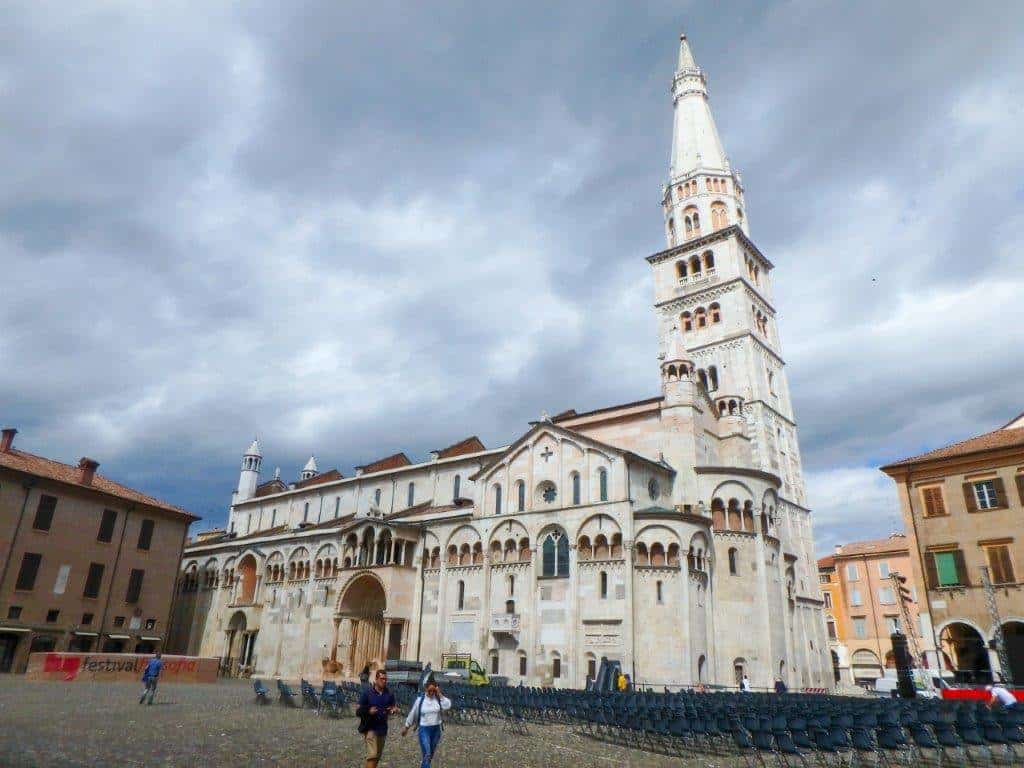
Torre Civica – Ghirlandina provides magnificent views of the city. The Duomo de Modena next to the Tower is a UNESCO building where the sunken nave is one of splendour to visit.
It was at this church the funeral of Luciano Pavarotti was held.
And for those of you who love speed (the vehicle we mean), Modena was the birthplace of Enzo Ferrari. The Ferrari Museum has some great showpieces.
You can also walk through the first workshop of Alfredo Ferrari, Enzo’s father, which is attached to the old family home.
Parma (Emilia-Romagna)
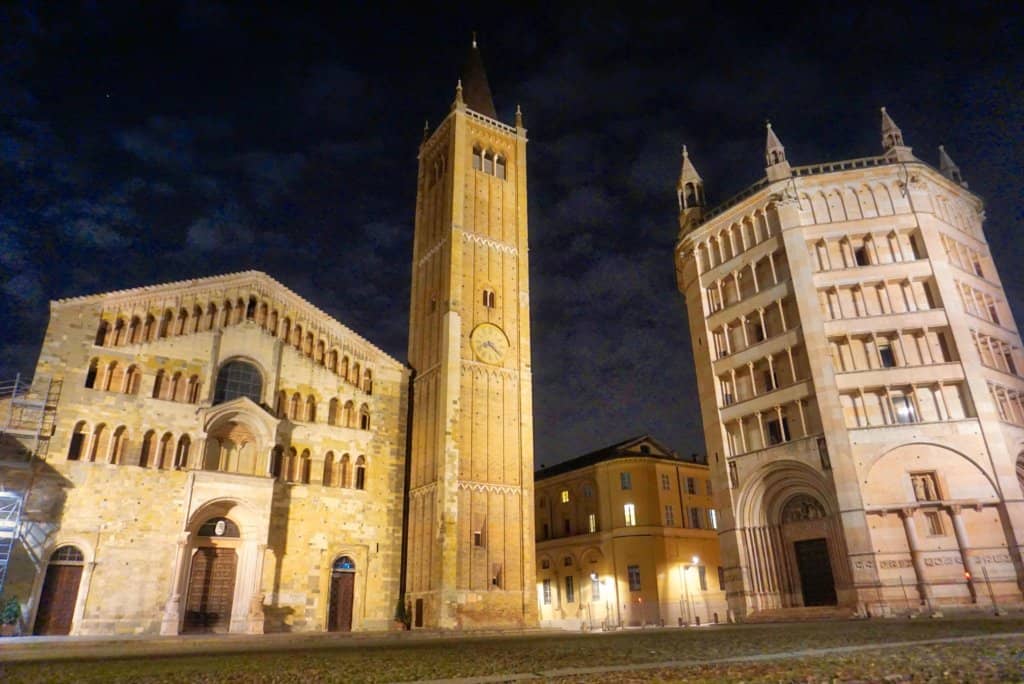
We had a great time in Parma, famous for its Parma Ham and Parmesan Cheese.
But also for Tagliatelle, Tortellini, and Malvasia red wine. The food and wine in Italy are wonderful, and Parma is another city that loves its food.
Parma also has stunning Romanesque architecture of its Parma Cathedral and Baptistery. The pink and marble of the Baptistery contrast with the stone cathedral.
Find the Relic at Turin (Piedmont)

The capital city of Piedmont is Turin in northern Italy, a city of churches, palaces, and defensive structures.
But it is the famous Shroud of Turin at the Cathedral of St John the Baptist that draws people to Turin. The shroud has been guarded here for four centuries.
Stop for a coffee or lunch at Piazza San Carlo, the main plaza of Turin. Here you can also find the “twins” of Turin, the churches of Santa Cristina and San Carlo.
And if you have visited Verona, the famous Savoy family of Verona had a residence in Turin, The Palazzo Reale di Torino.
Uncover the Beauty of Verona (Veneto)
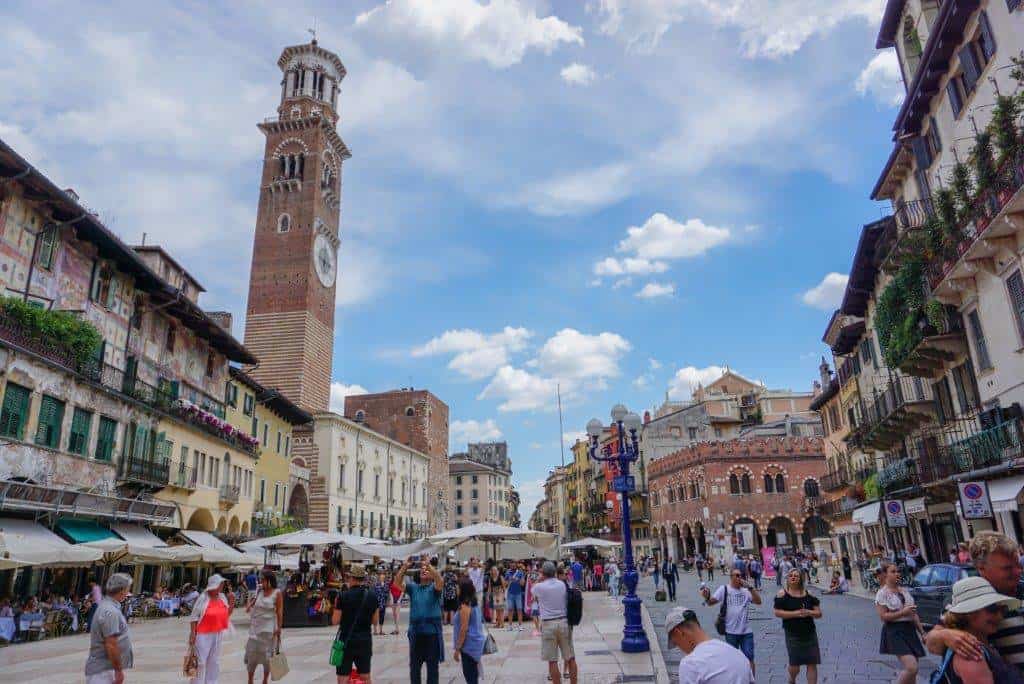
Verona is a city of Roman ruins, medieval castles and famous families.
Visit the 1st-century Verona Arena for summer concerts and opera.
Dine at Piazza Bra is one of the many places for cafes and restaurants.
Walk the medieval fortified Castelvecchio Bridge and learn more about Verona at the Castelvecchio Museum.
Or find Juliet’s Balcony made famous due to the Shakespearean tragedy Romeo and Juliet.
But it is the Piazza della Erbe and Lamberti Tower, which is a vibrant place filled with markets and people.
Wander the Canals of Venice (Veneto)
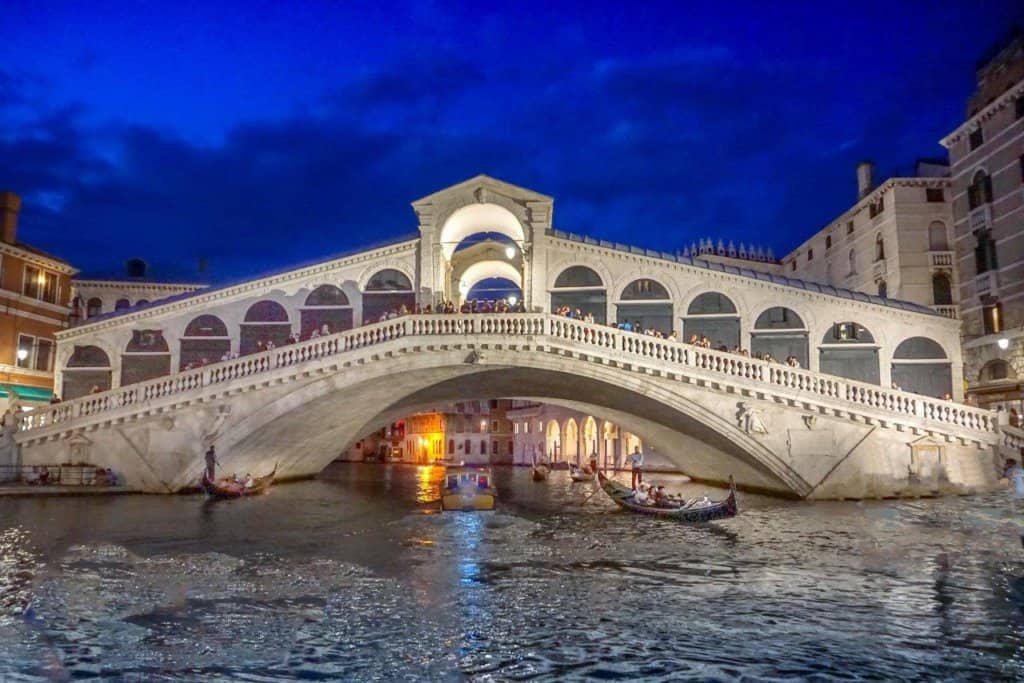
Any trip to Italy has to include the famous waterways of Venice.
Venice is the capital of the Veneto region, built on the islands in the Adriatic Sea.
Take a water taxi to see Piazza San Marco for St. Mark’s Basilica. Or a nighttime walk over the Rialto Bridge.
With Renaissance and Gothic palaces, Venice is a wonderful destination in northern Italy to explore.
See the Beauty of Milan (Lombardy)
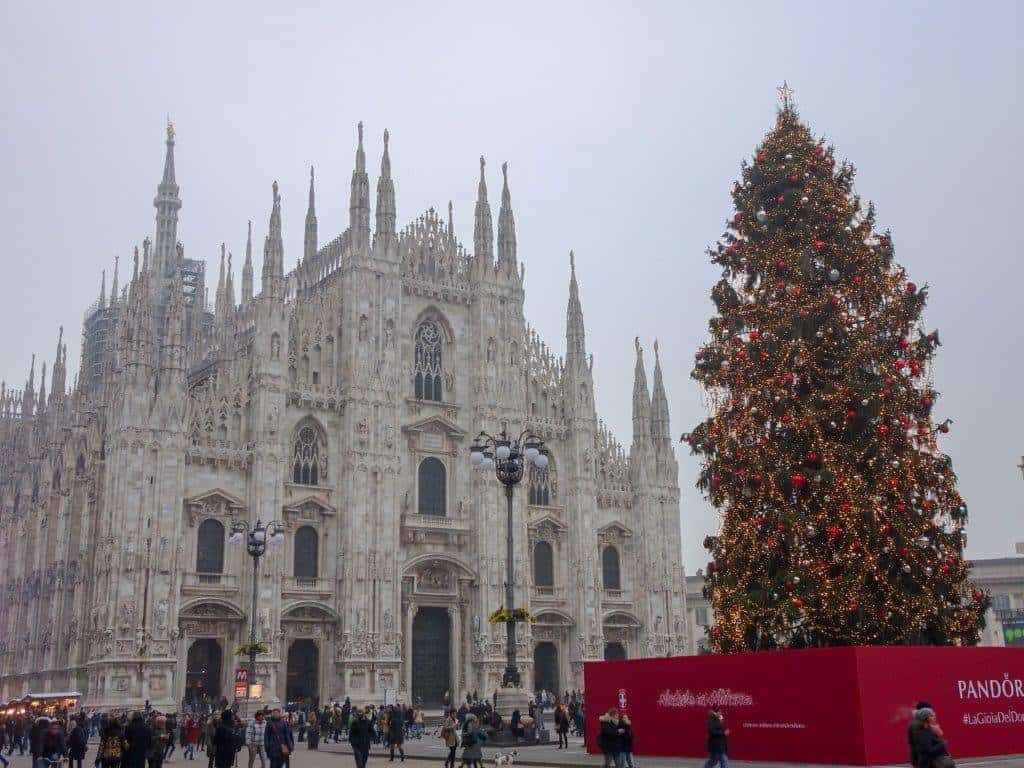
Milan is the city of fashion, and a walk along the Via Torino is the famous shopping street in Milan.
And for exquisite shopping, the Galleria Vittorio Emanuele II is impressive and is where you’ll find the Turin Coat of Arms. The coat of arms is displayed as a mosaic of the four kingdoms – Milan, Turin, Florence, and Rome.
And when you tire of shopping, you can visit the Castello Sforzesco, a 15th-century castle of a Milan ducal family.
Walk the streets of Genoa (Liguria)
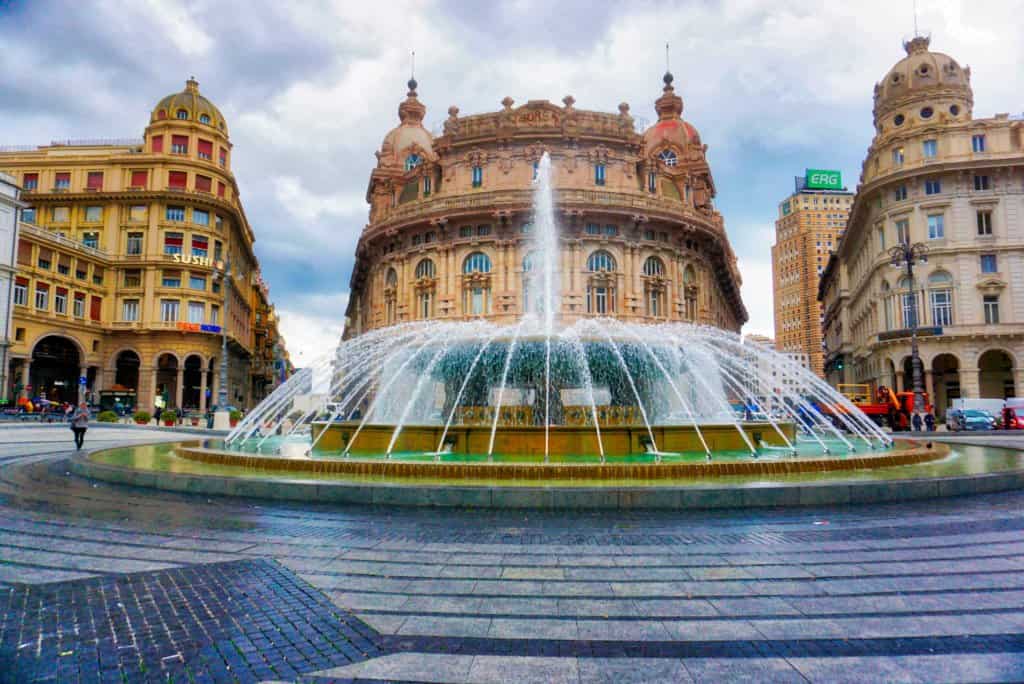
The Piazza de Ferrari fountain is the main attraction of Genoa’s main square.
The piazza is surrounded by some impressive buildings, including two palaces, an opera house, a library, and a bank.
Change up your itinerary of Italy and walk the birthplace of the famous explorer Christopher Columbus.
Visit the seaside at Riomaggiore (Liguria)
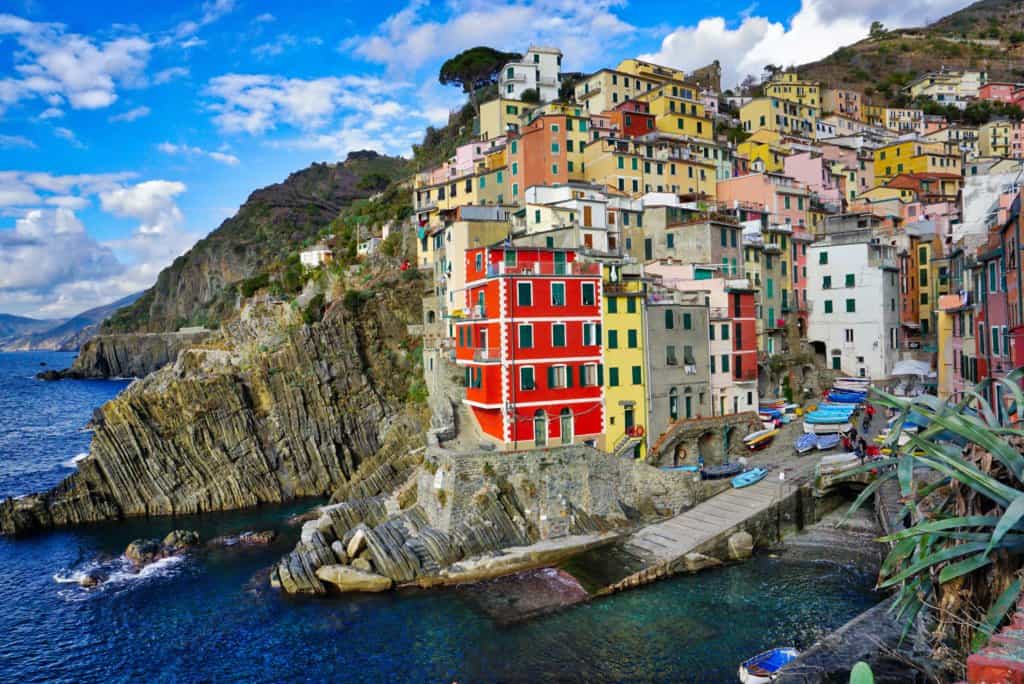
Riomaggiore is one of the pretty Cinque Terra towns and the first of the five Cinque Terre towns.
The road winds its way down to the seaside town, where you can indulge in fresh seafood.
With the fresh salty air of the Italian Riveria, you can venture north to see the other towns of:
- Manarola
- Corniglia
- Vernazza
- Monterosso
If you have the opportunity, take a boat cruise to see a different perspective of this wondrous coastline.
Find the village at Dolceacqua (Liguria)
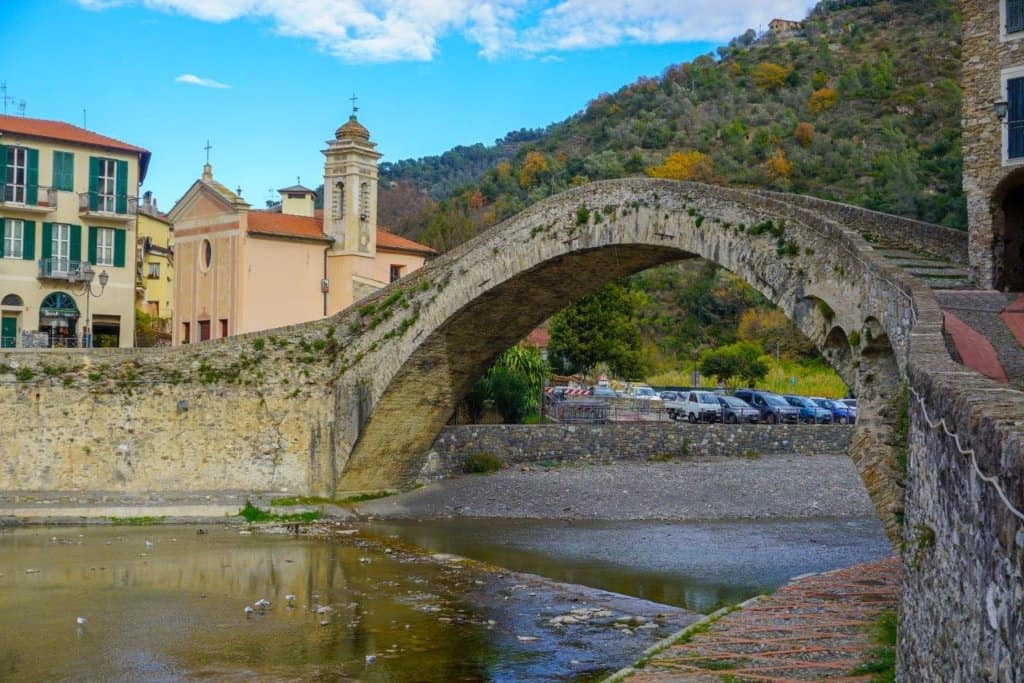
We crossed the arch bridge over the river Nervia to this wonderful old medieval village full of narrow lanes climbing the hill to the Doria castle.
The narrow lanes with tall buildings on either side give the feeling of walking in a canyon.
One narrow lane was filled with white umbrellas, each with handwritten messages on the underside. Talking about love and learning from the past.
Take the drive up the valley to Doria Castle.
Road Trip through Italy – One of the Benefits
The benefit of hiring a car and taking a road trip through Italy is being able to stop and explore places piquing your interest as you drive.
And it pays to be flexible when planning your road trip. Why?
Well, the locals always have tips for you to see places nearby with suggestions too of local foods to try. This makes taking a road trip to Italy that much more enjoyable.
Stop at Castello di Monselice (Veneto)
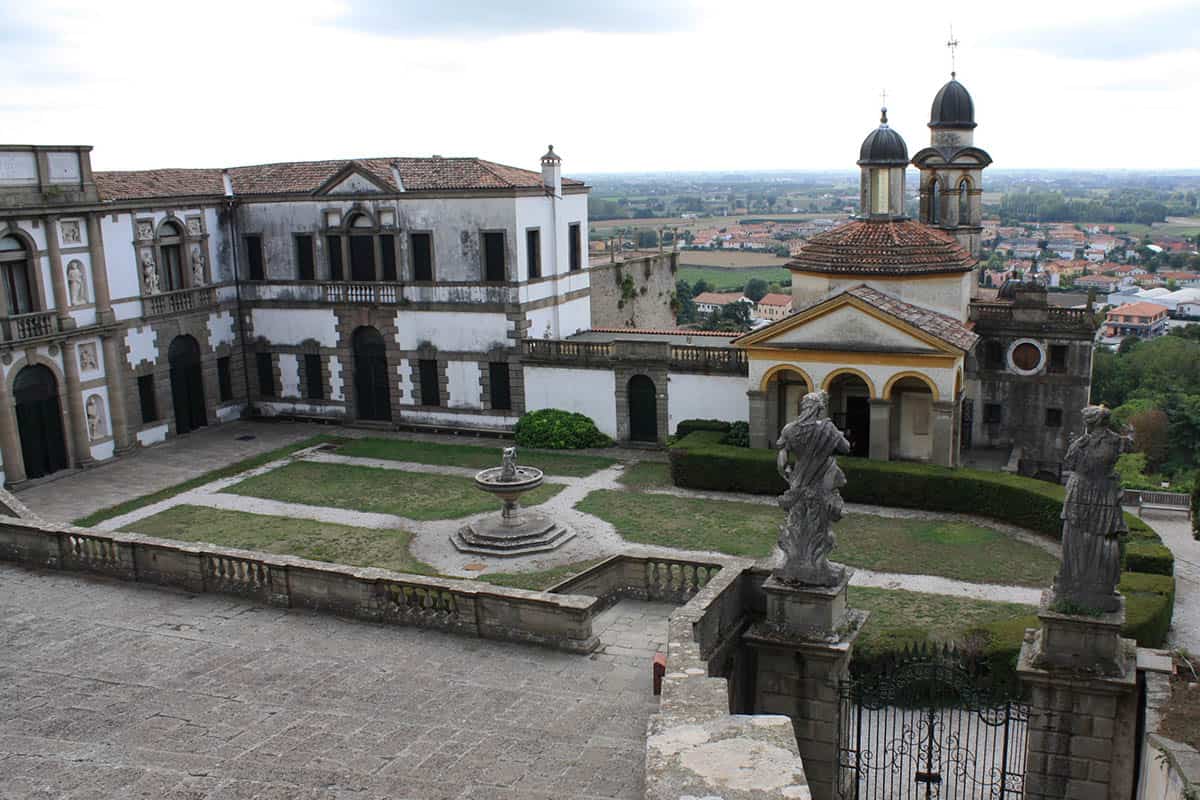
Driving along the autostrada between Bologna and Trieste, we saw an unexpected but amazing view of Castello di Monselice.
What caught our attention was the seven chapels ascending the hillside.
The castle has had many owners over the centuries but is now a museum complex open to the public from March to November.
Since 1981 the complex has been owned by the Veneto Region and is open to the public from March to November.
Plan to see the Best of Northern Italy
So, when you next plan your road trip to Italy, there are some wonderful places in northern Italy.
The countryside of northern Italy is stunning, with the cities with so much history and delightful foods to sample.
When you hire a car, you have the freedom to stop at these wonderful locations as well as other villages you find.
You can stay in boutique hotels in the old cities or rent an Airbnb. Take evening strolls and enjoy sumptuous pasta dishes with a glass of Italian wine.
Northern Italy is vast, with eight incredible regions to explore.