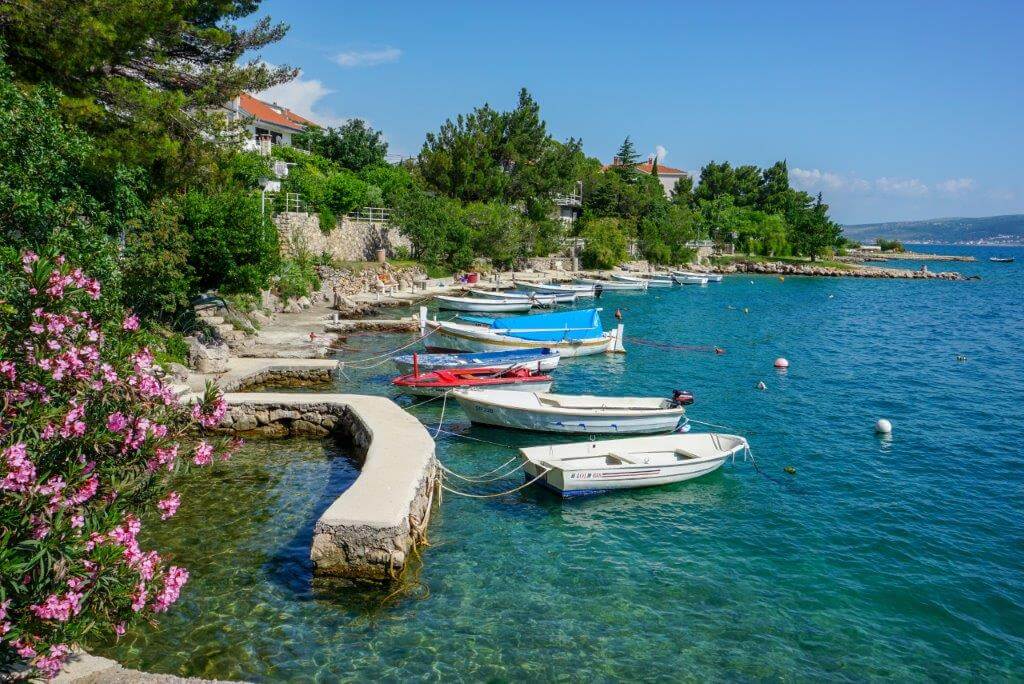
Croatia is a wonderful country with many beautiful towns, a long coastline, and a rich history. This makes finding the best places to visit for a road trip in Croatia very exciting.
And we must admit, anywhere you intend to visit in Croatia will not disappoint. This amazing country caters for everyone.
With hiking trails, mountain climbing, pristine beaches, historic towns, and wonderful food at an affordable price. It’s no surprise Croatia is high on people’s bucket lists.
It certainly was for us.
We found the best places to visit for a road trip in Croatia, which is the exciting part of planning.
For us, we have been lucky enough to spend two extended periods in Croatia:
- Our first Croatian road trip took us from Trieste, Italy, through Croatia to Albania.
- Our second Croatian road trip included the Istria Peninsula.
This is why we have compiled a guide to Croatia for you to plan your perfect Croatian holiday.
There are many “must-see things to do in Croatia” to help take the guesswork out of your itinerary planning.
Why Choose a Road Trip to Croatia?
A road trip through Croatia is one of the best ways to see this wonderful country.
With a fantastic roading system and a beautiful coastline, you have lots of opportunities to stop and take in the panoramic views.
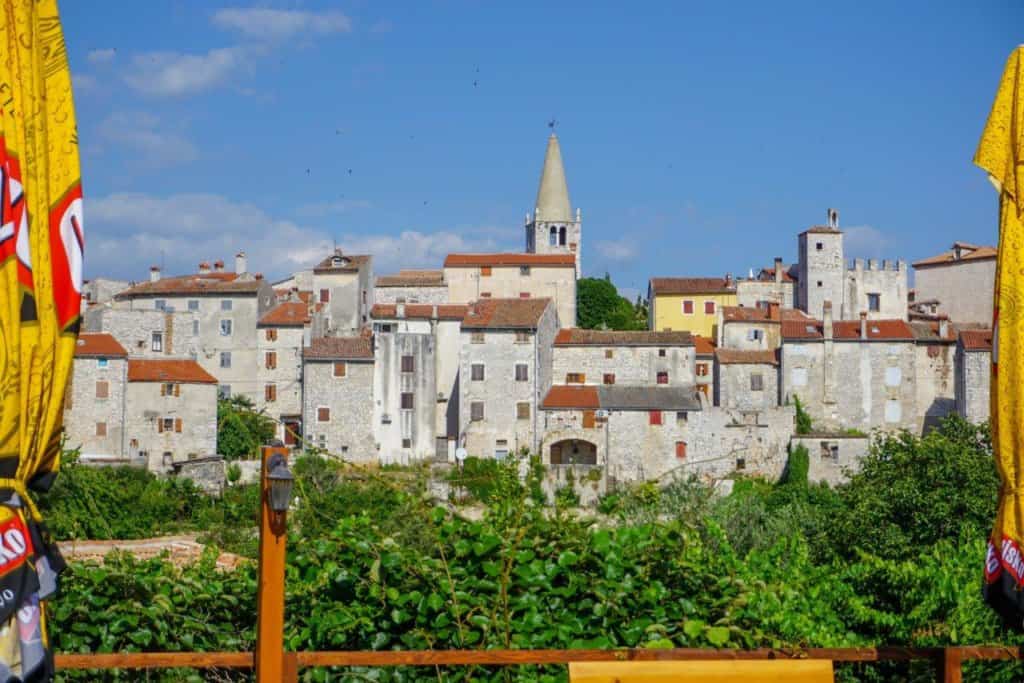
You can relax on the Istria Peninsula or stay in one of its many cities.
Our first road trip to Croatia was between two Italian house-sitting assignments.
We spent our time on a three-week road trip from Croatia to Albania.
Driving ourselves allowed us to take some detours to visit Bosnia-Herzegovina and Montenegro, which are both easily accessible from Croatia.
How to get to Croatia for a road trip
To begin your road trip to Croatia, you have several options:
- Hire a car on arrival in Croatia.
- Airports for Zadar, Split, and Dubrovnik have services to many European cities.
- Take the Bus from Venice.
- Book the Ferry from Venice.
Venice to Pula Ferry has up to three sailings per week and takes 3.5 hours. There are two ferry services – Kompass and Venezia Lines.
If you hire a car from Italy, remember to ask about the one-way fee unless you return the rental car to the same place.
A Guide to Planning Your Itinerary for Croatia
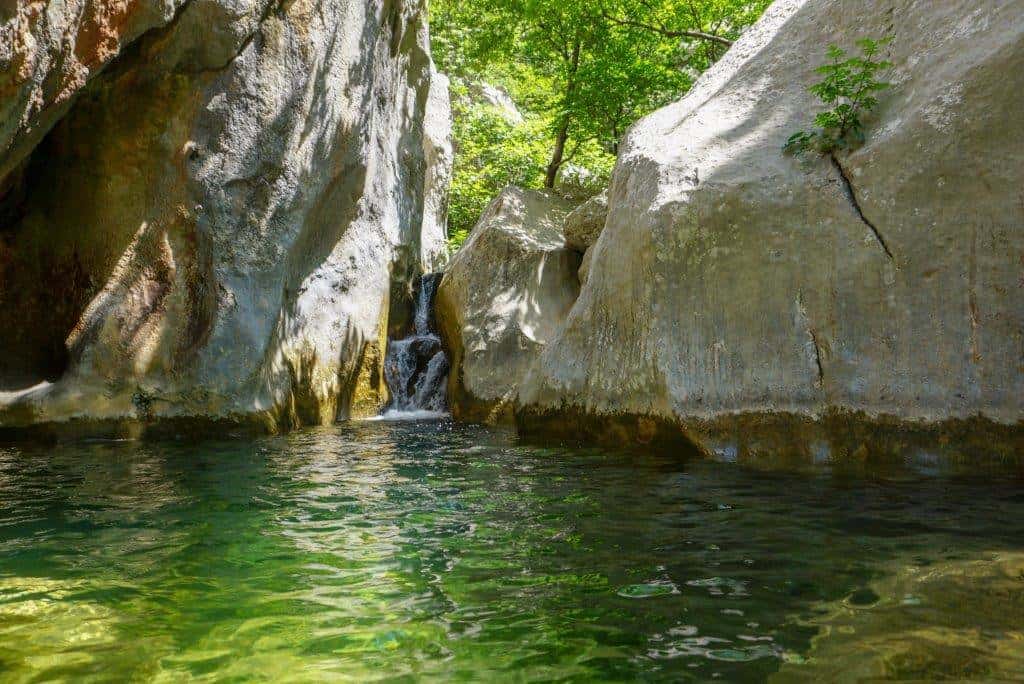
Where to start your road trip will always depend on the available time and what type of road trip experience suits you.
We often say to ourselves, “you can’t see everything,” which is why we tend to pick and choose fewer places for a more rewarding experience.
And, we have to say, our Croatia road trip proved to be one of our best slow travel trips.
Slow Travel – the best advice when travelling is to take your time and plan to enjoy your road trip rather than constantly being on the road and sleeping in a different place each night.
We want to stay at least three nights at each location.
Sometimes, it is better to experience one country, its people, its culture and history at a slower pace. This way, you come away feeling rewarded and more knowledgeable about the experience.
Remember your Travel Insurance
Make sure to organize your travel insurance before you leave home.
We have been using CoverMore since 2016 for our worldwide travel insurance. CoverMore is very easy to set up online and makes it easy to liaise with them when organizing our online claims (we have had two trouble-free claims).
If you need a quote, click on the advertisement above.
Five Tips for Driving in Croatia
While we use our own car in Croatia, we also use Europcar. We love the selection from this top-branded car rental.
When booking a rental car, remember to ask if there is a one-way fee and check if your home country requires an international driver’s license.
1. Conditions of roads in Croatia
When not taking the motorway, the condition of the secondary roads was reasonable. Even the rural and mountainous areas could be travelled at the designated speed.
Croatia has one of the most beautiful coastal roads you can drive. The scenery is stunning.
2. Why choose the motorway and not the secondary roads?
The first answer is always time. If you want to reach a destination quicker, then the motorway system is the best planning option.
The other benefit is for the driver, not having to constantly change speed for the many villages you can pass through.
3. Croatia Road Tolls
Croatia has one of the best motorway systems we have driven. The roads and tunnels through the mountainous landscape are the quickest routes to your destination. Overall, the cost of tolls is reasonable compared to Italy and France.
There are exceptions, like the stretch of motorway inland to Vodopad Gubavica.
4. Parking in Croatia
We use MapsMe rather than Google to find parking near the old towns we want to explore.
Parking prices are reasonable, especially outside the peak season when parking is free.
5. Be Aware of the Quickest Route
Using MapsMe or Google may help you find the quickest route. Sometimes, these routes are country lanes, and you take longer. It’s better to remain on the main roadway.
When is the Best Season to Travel to Croatia
Croatia’s weather makes it easy to visit year-round, but we suggest going off-peak to improve your travel experience.
Peak Season: June to August is the hottest and most crowded time to visit Croatia.
Shoulder Season: April to May and September to October
Ticket prices to National Parks are reduced in the non-peak months.
If you want to avoid a large number of tour groups, then choose the shoulder season.
The number of tourists we saw in the major cities of Dubrovnik and Split in late September (pre-Covid) gave us an appreciation of the numbers in peak season.
Check Cruise Ship itineraries for Zadar, Split, and Dubrovnik to avoid crowds.
We chose early October for our first road trip to Croatia. It was still warm during the day, the water was swimmable, and there were fewer tour groups.
Our second road trip was from late May to early June. We swam, encountered fewer tourists and loved the mid-20s temperatures.
Fun Facts of Croatia:
- There are at least 1,000 Islands in Croatia
- There are 11 Nature Parks, eight National Parks, and two Nature Reserves
- The coastline is 5,835km
- The total hours of sunshine each year for coastal towns in Croatia is more than 2,600, similar to Barcelona, Spain; Sydney, Australia; and San Juan, Puerto Rico.
Best Places to Visit for a Road Trip in Croatia
We have travelled the popular Croatian coastline, driven inland to see canyons and idyllic villages and spent time on the Pula Peninsula.
But whatever road trip to Croatia you plan, you won’t be disappointed with the beauty and history of this country.
We totally fell in love with the beauty of Croatia on our coastal drive from Rijeka to Zadar.
With stunning crystal-clear water on one side and the mountains looming on the other. This part of our road trip to Croatia was one of the best experiences.
There are many places to stop along the way for a coffee or a longer stay.
1. Drive the beautiful Croatia coastline
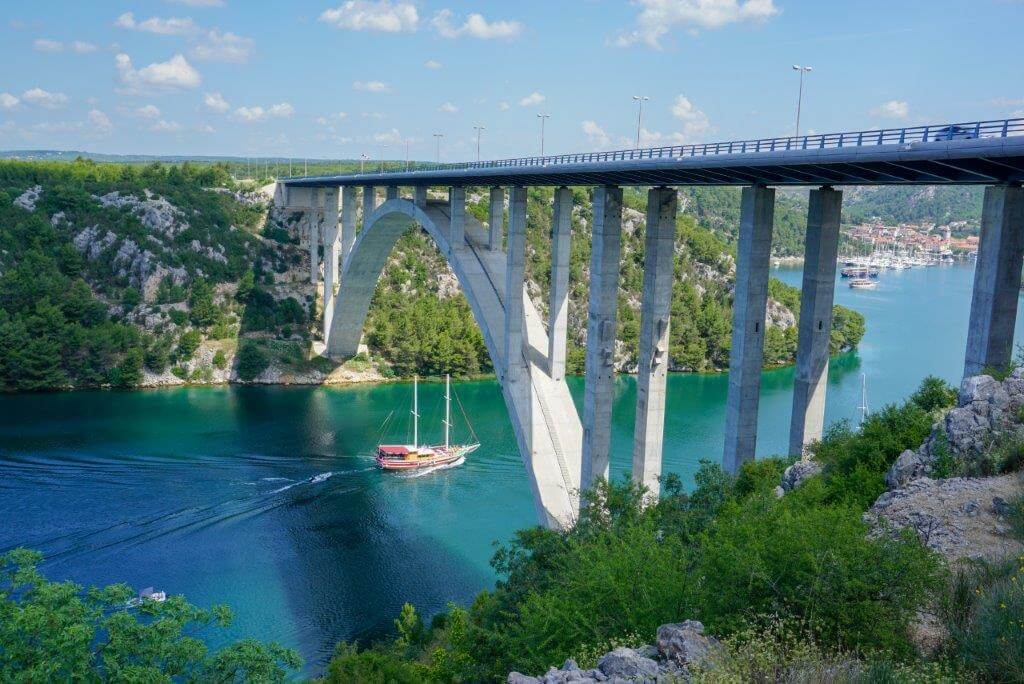
Travelling the coast of Croatia to Dubrovnik was the highlight of our Croatia road trip.
We had many stops for photos, with the stony mountain range on the left (heading southwards) and the turquoise sea on the right.
While it may be tempting to travel inland via the motorway, Croatia’s coastline was at the top of our list.
The top speed is often 80km, with plenty of places to pull in and admire the views. However, at times, speed is restricted to 70km or less if you get stuck behind campervans.
But hey, it’s all part of the experience.
Remember to factor this in when calculating the time Google may suggest for your self-drive road trip.
2. Stay overnight at Selce
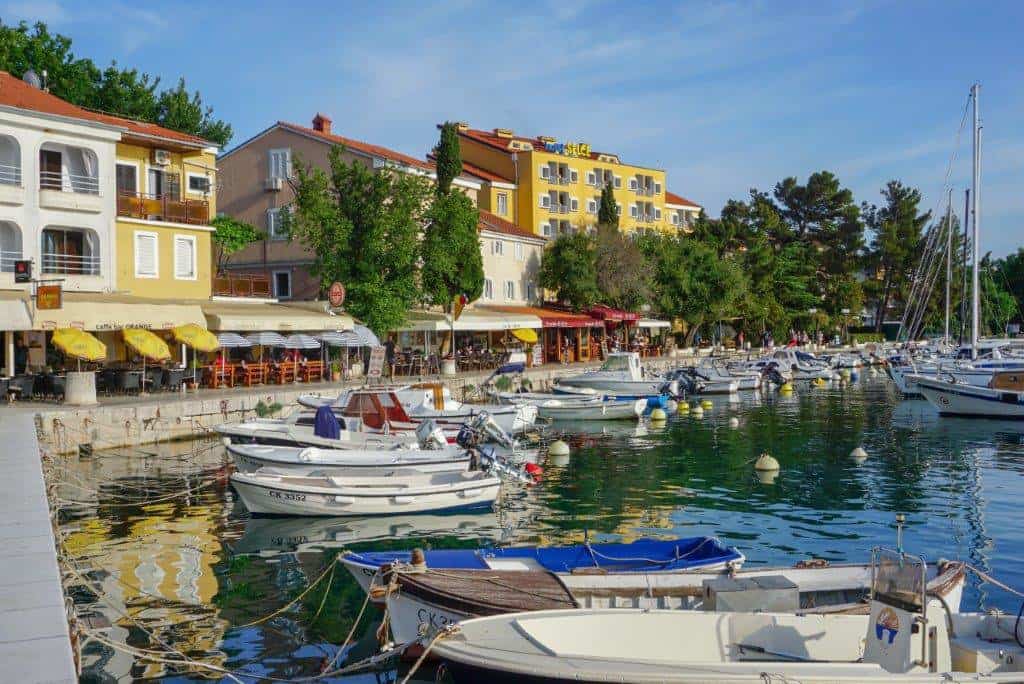
Selce is only 3 km from Crikvenica and is another option to break your journey.
We loved our stop here in late May. The area has a shoreline of beaches and a vibrant shopping and restaurant area on the promenade.
Airbnb suggestion: Villa Lydia Selce
3. Swim at Karlobag
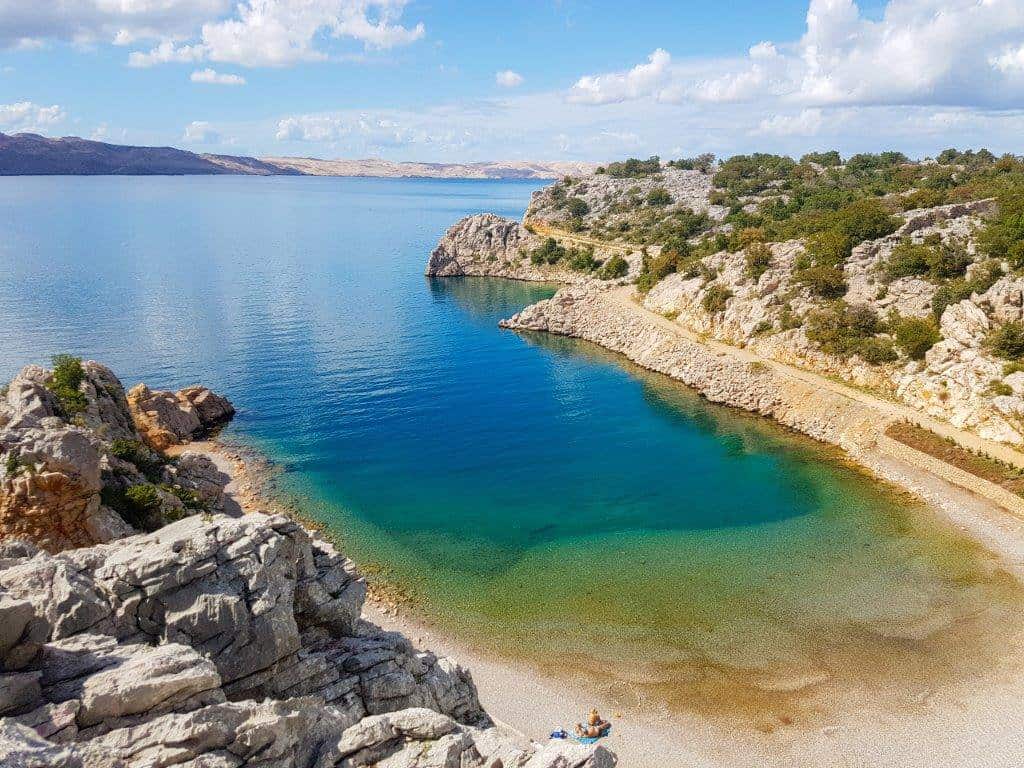
Wherever you are along Croatia’s coastal highway, there are always opportunities to swim.
The crystal clear and warm waters were so enticing that we found ourselves enjoying the beach rather than getting to our planned destination.
Seeing the beach at Karlobag with crystal clear waters made us stop for a break on our journey.
With only three couples taking a swim, the beach was practically deserted. But what happened next was really weird.
All of us couples did a double-take at each other as we entered the water. With no common language between us, we all knew there was something strange about this beautiful bay.
It was the water temperature.
The water underneath the surface was mild, but the top layer felt like ice. We later learned the bay had a freshwater spring of cold water.
4. Starigrad Paklenica
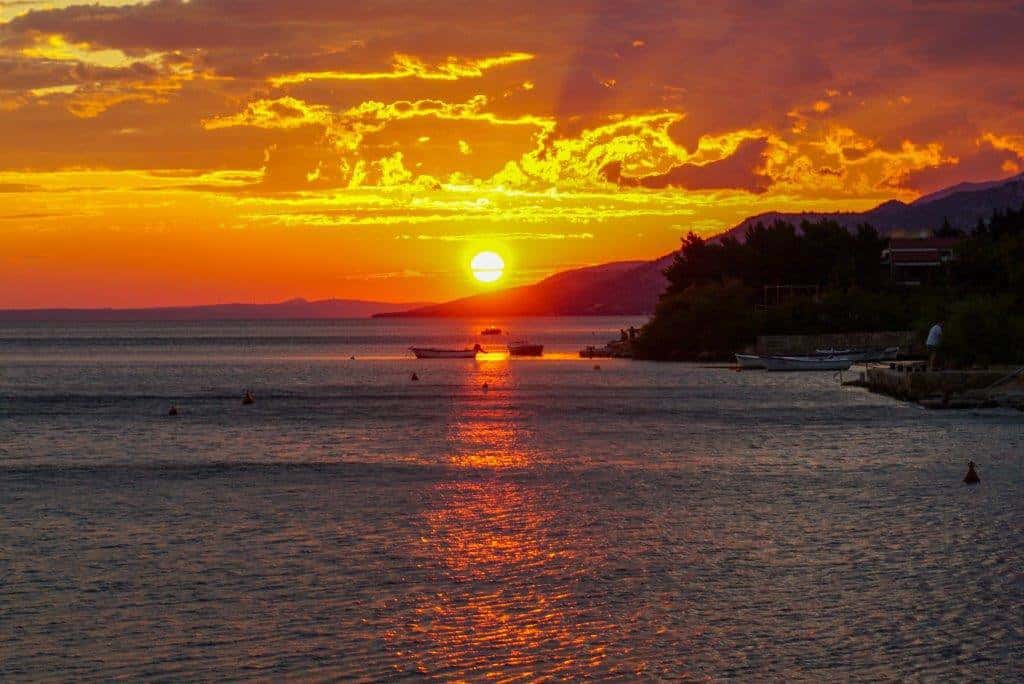
Taking a mini-break from house-sitting, we secured a month-long Airbnb apartment in the small town of Starigrad Paklenica.
Starigrad Paklenica’s beautiful, crystal-clear sea attracted us to stay, and with its proximity to Zadar, a city we love, and Paklenica National Park nearby, we decided to stay.
The town has a busy, small seaside promenade and a history as an early Roman settlement. Oh, and the sunsets were amazing.
Airbnb suggestion: Buco Apartments
5. Paklenica National Park
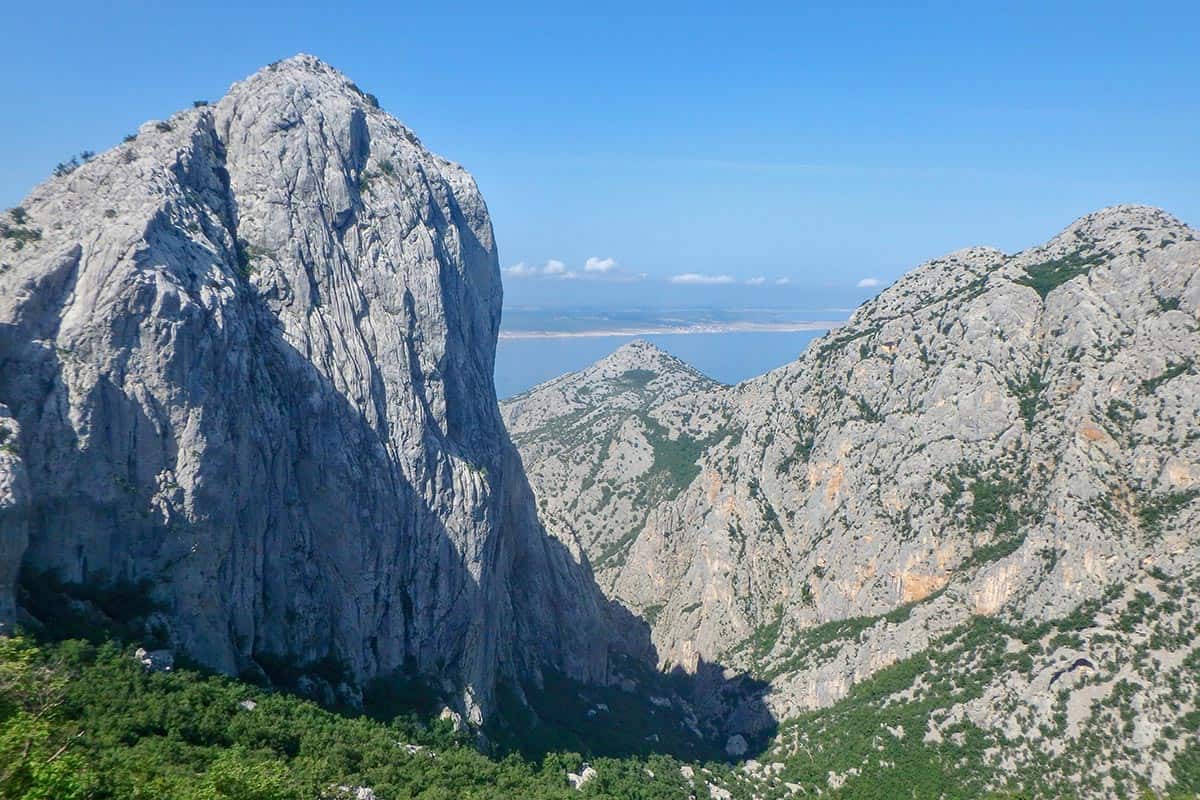
Recommended if you love hiking or climbing.
6. Drive inland to Plitvice Lakes National Park
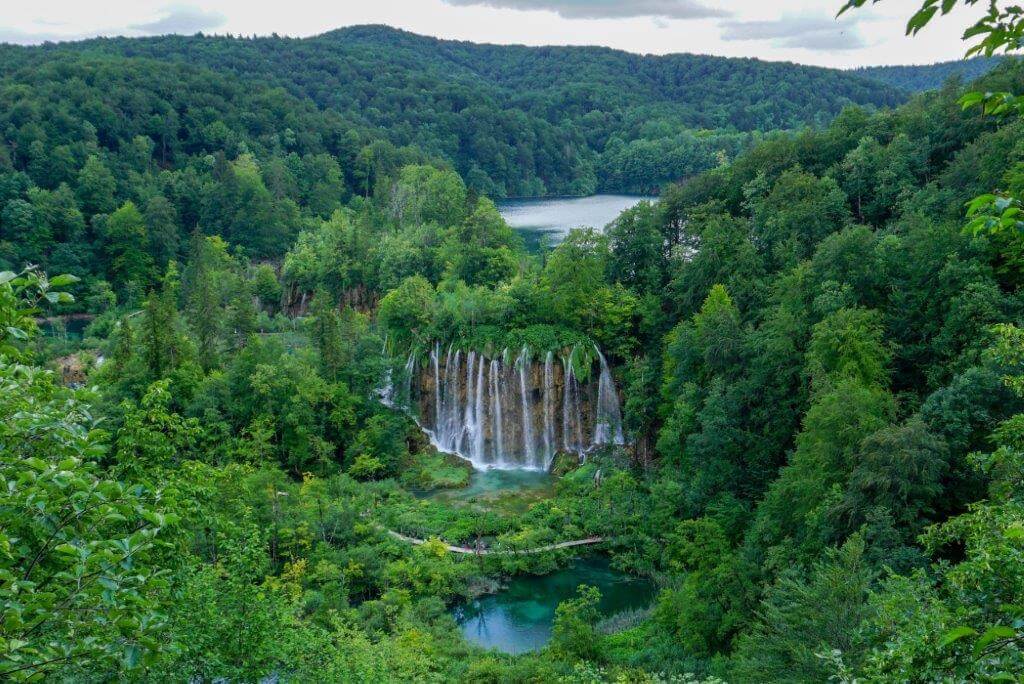
Depending on the time you have allowed yourself to see Croatia, it is worthwhile to visit one or more of the must-see Croatian National Parks.
Plitvice Lakes National Park is the highest-rated and immensely enjoyable day out, walking and viewing the many lakes and stunning waterfalls.
We stayed two nights as the walk around the lakes needed a whole day to be enjoyed.
7. Spend Three Nights at Zadar
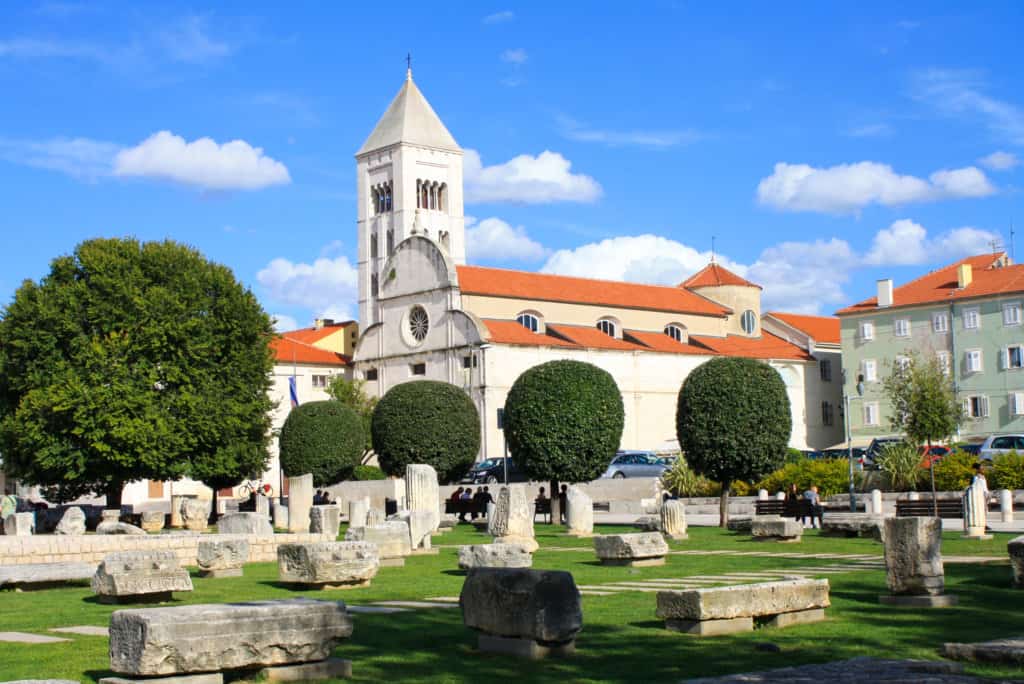
Zadar is the northern city of the Dalmatian coast, with National Parks to the east and an archipelago of islands to the west.
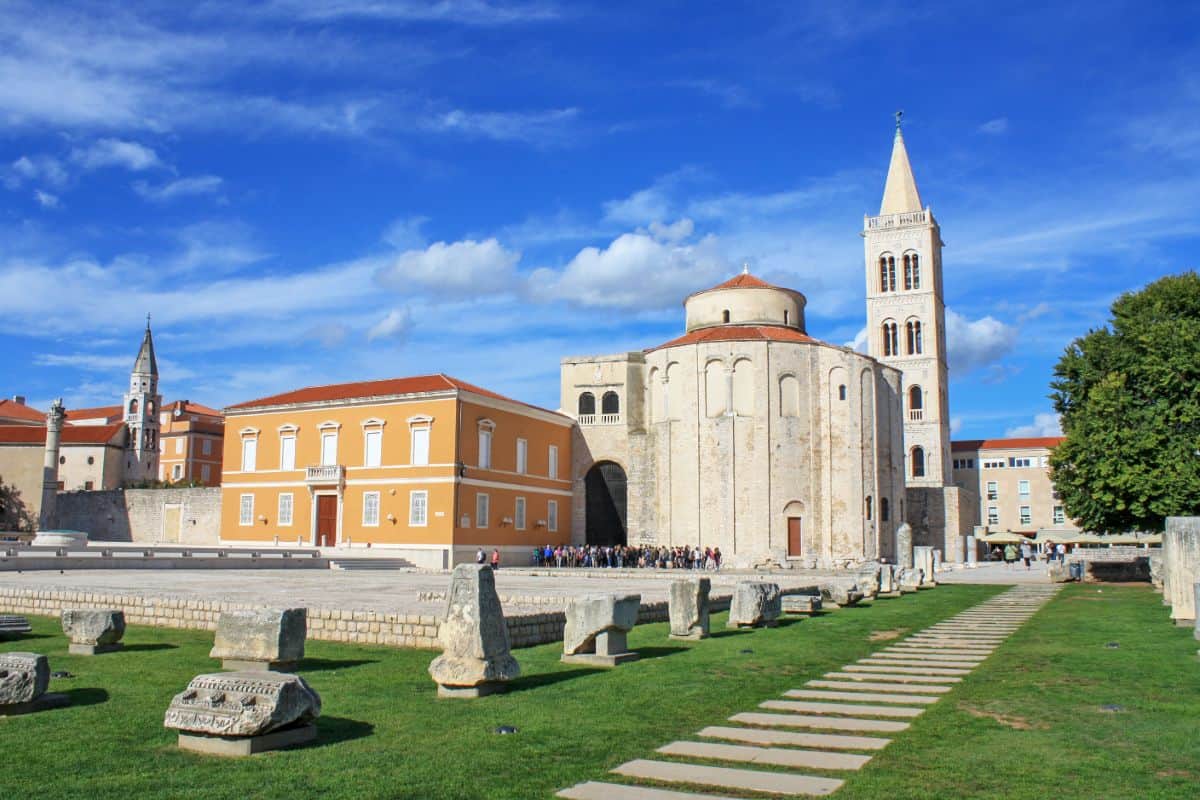
The city has Roman ruins you can wander through, St Anastasia’s Cathedral tower to climb for a view of the city, walkable old city walls that prevented capture from the Turks, and the promenade for a harbour view.
A favourite for visitors to the city would be The Riva – waterfront promenade. Whether you are up for a stroll, need a swim to cool off, or just want to sit and take in the view, this is the place to be.
Zadar is a great base from which to explore four national parks in Croatia.
8. Krka National Park
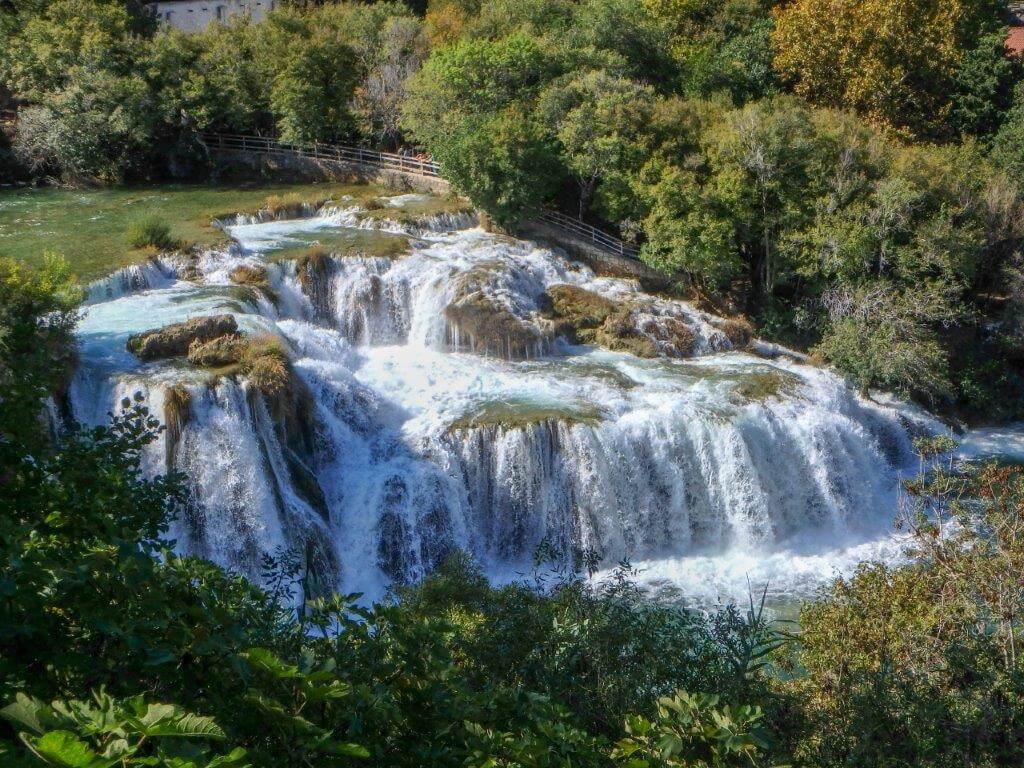
It is vast, with the popular Skradinski Buk waterfall.
Krka National Park is perfect for a half-day trip if you walk to Skradinski Buk waterfall, a lovely picnic spot.
9. Make a Detour to Novigrad
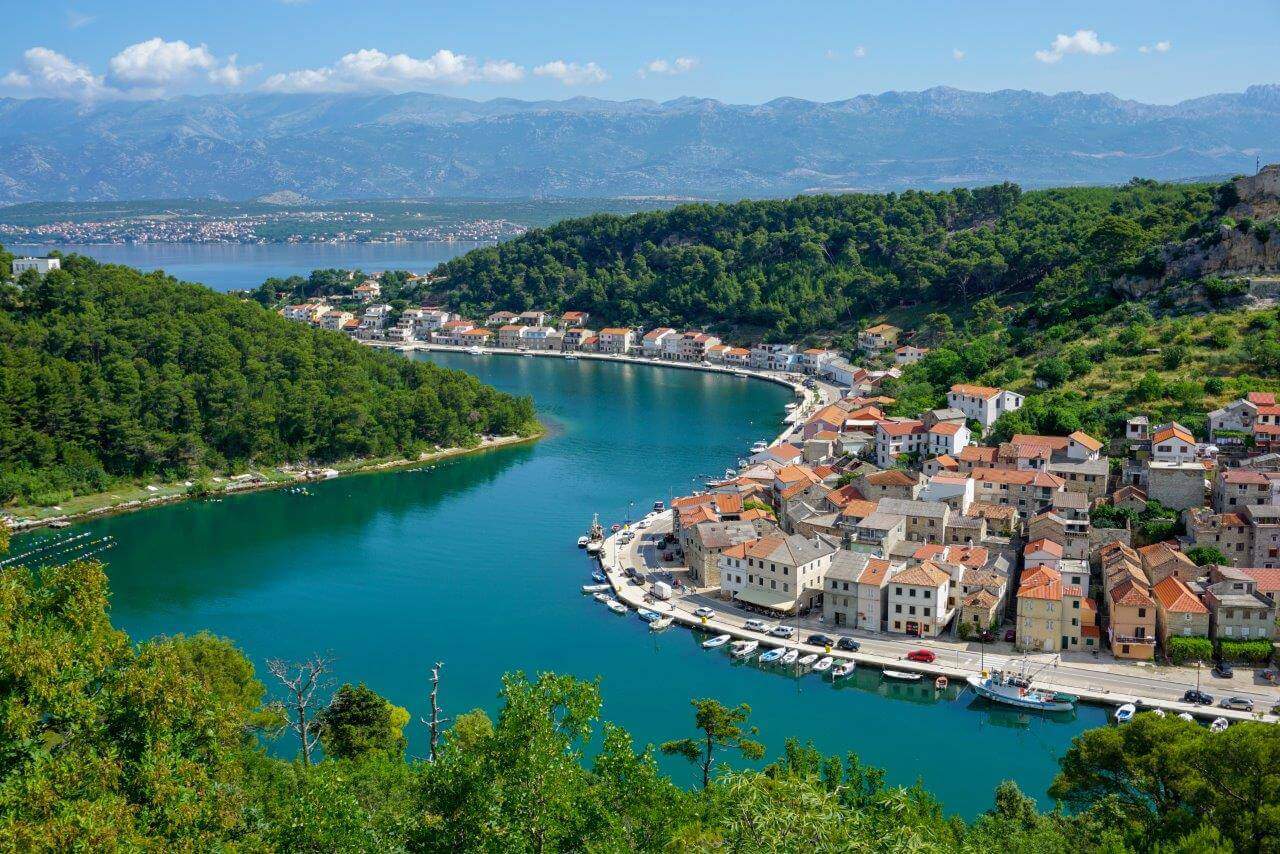
We had both discussed our general Croatia road trip itinerary plan, and we decided to book some of the accommodation while on the road.
It meant we could stay longer in interesting places and explore more of the area.
Zadar was our pick for extending our itinerary to visit the national parks and towns of Novigrad and Sibenik,
10. Enjoy Lunch at Sibenik
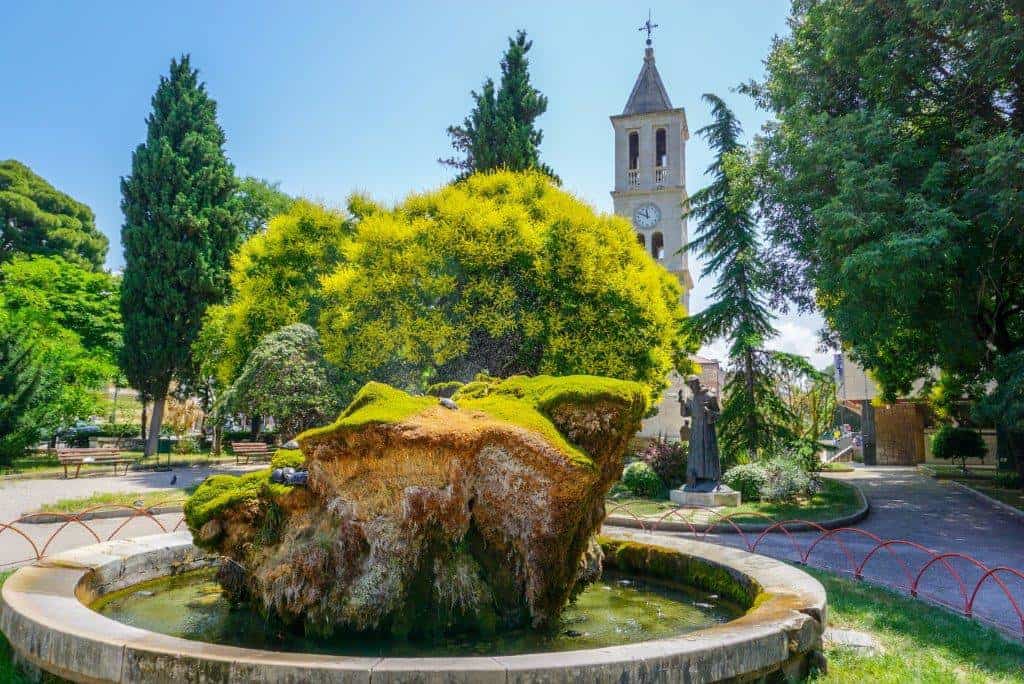
Sibenik can often be overlooked when leaving Zadar for Split.
We loved the labyrinth of steep back streets to find a hidden garden on our way to the fortress.
Unlike other Croatian towns, Sibenik was founded by the Croatian King Petar Kresimir IV.
11. Stop for Coffee at Primosten
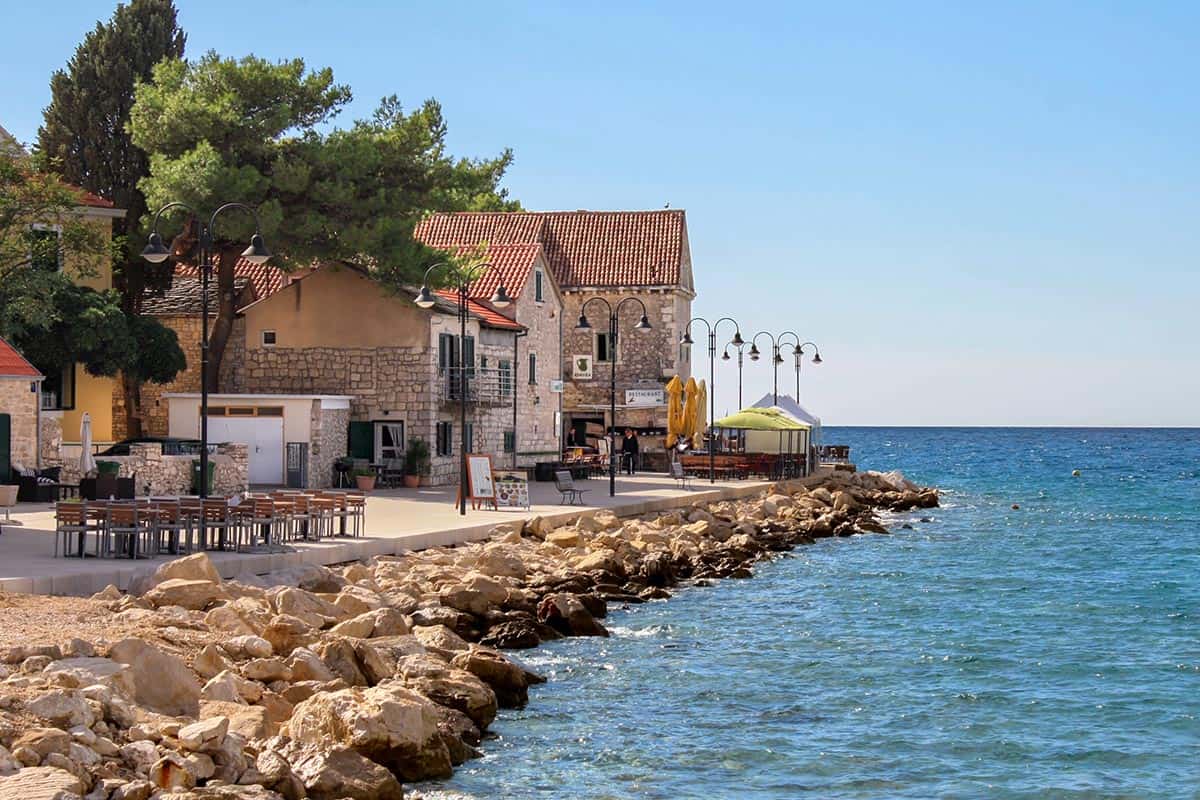
Primosten was a coffee break for us to visit what was once a republic of Venice. One of the main attractions is the Church of St George in the old town and the maritime cemetery.
Before walking to the church, we found a cafe in the small inlet harbour.
12. Take the Ferry to Trogir
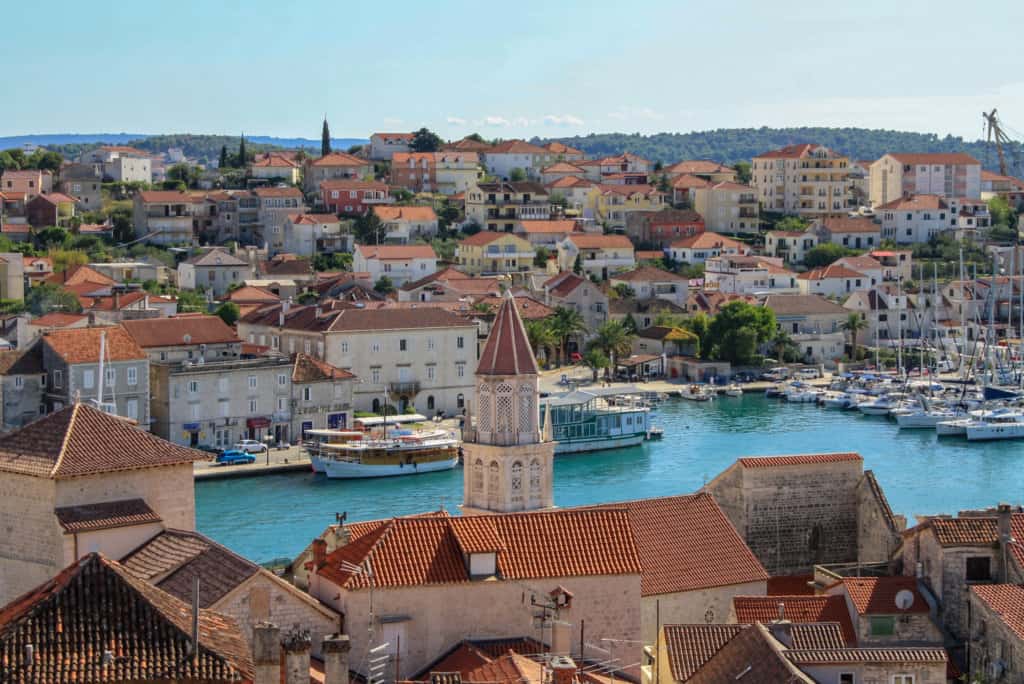
Trogir was once under Venetian rule, which is why the architecture is stunning. Make sure to visit the Cathedral of St Lawrence, a UNESCO site.
We spent the day at Trogir, taking the ferry from Split. Trogir is a popular day trip for lunch in one of its many cafes.
13. Walk the Promenade of Split
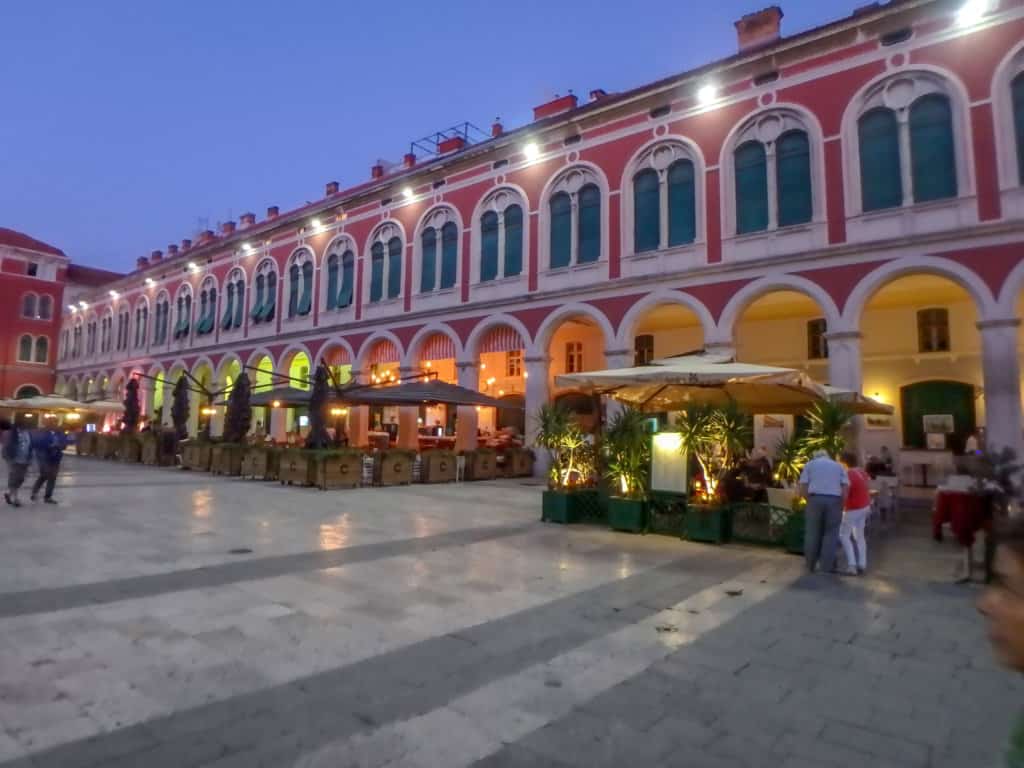
Split was one of the cities in Croatia we enjoyed the most. This 1700-year-old city, with its winding streets and hidden squares, made each day of exploring a new experience.
Of course, the highlight was the Diocletian Palace.
Who would imagine you could sit here for an evening, sipping on a glass of wine, listening to music, on the steps in 305 AD? How special is that?
Where to Stay: Our wonderful host, Diana, has an apartment in Split: Apartment Carpe Diem, Ulica Miljenka Smoje 1.
14. Take an Island Day Trip from Split
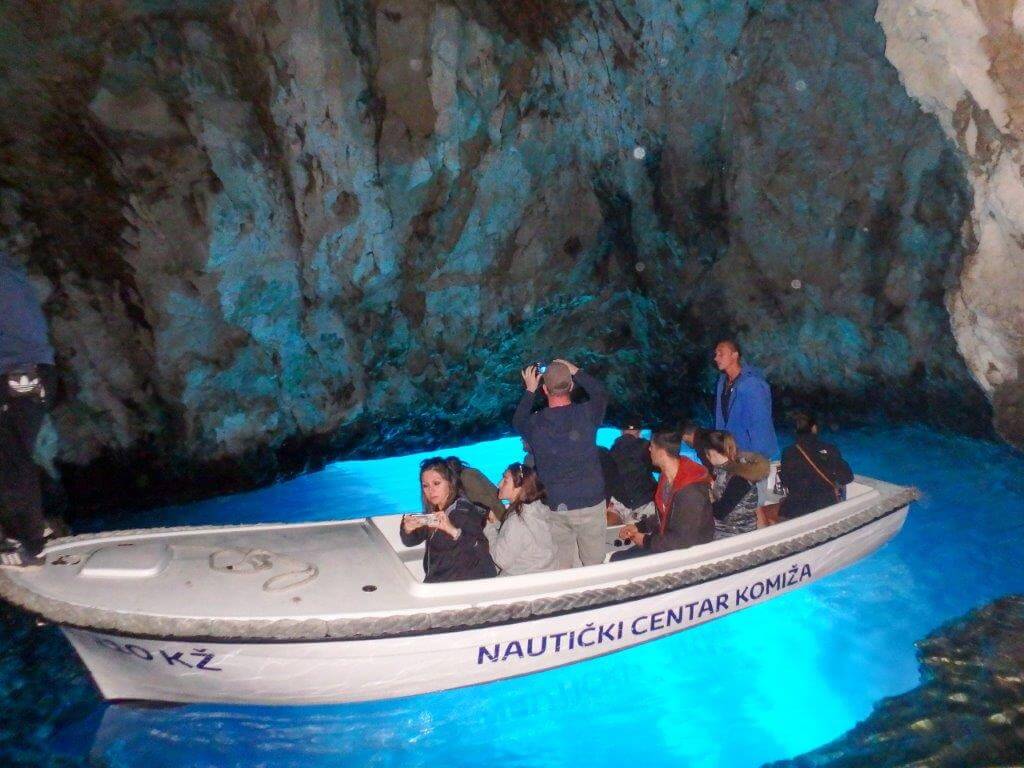
Take a boat excursion or ferry to the nearby islands of Hvar and Brac.
Hvar is one of the sunniest islands in Split to visit.
Its medieval charm will have you captivated as you explore the many narrow streets, shops, and restaurants. A walk up to the fortress is well worth the climb, especially for the views.
Brac is closer to Split for beaches and restaurants.
To get an idea of the available day trips, you can search and book online with Viator.
15. Drive Inland for more of Croatia
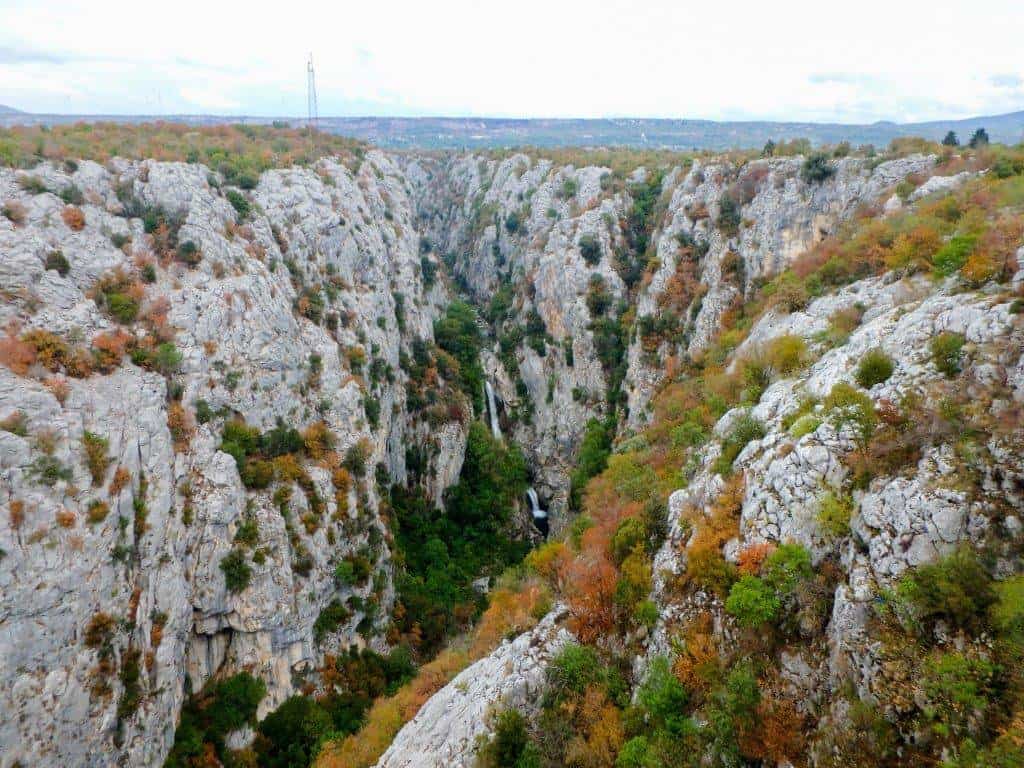
Travelling inland from Split took us back in time as we passed through some small stone-house villages on our way to Sinj and Vodopad Gubavica.
Sinj was once a fortress held by the Ottomans during the 16th-17th century. Many pilgrims visit Sinj to visit The Church of Our Lady of Sinj. Her statue is visible as you ascend the hilltop.
Vodopad Gubavica is a worthwhile deviation from which to view the canyon on the River Cetina.
Vodopad Gubavica has two waterfalls, the largest of which is 50m and one of the biggest in Croatia. The closest town is Zadvarje, where you can book an organized, professional tour of the canyon.
16. Stop at Ston
It’s worth a stop to break your journey at Ston or take a day trip from Dubrovnik
Ston is the salt-producing town where you will see one of the longest fortifications in Europe, a 5.5km wall protecting a medieval town.
If you are travelling from Split to Dubrovnik, it’s definitely worth a stop.
17. Walk the Walls of Dubrovnik
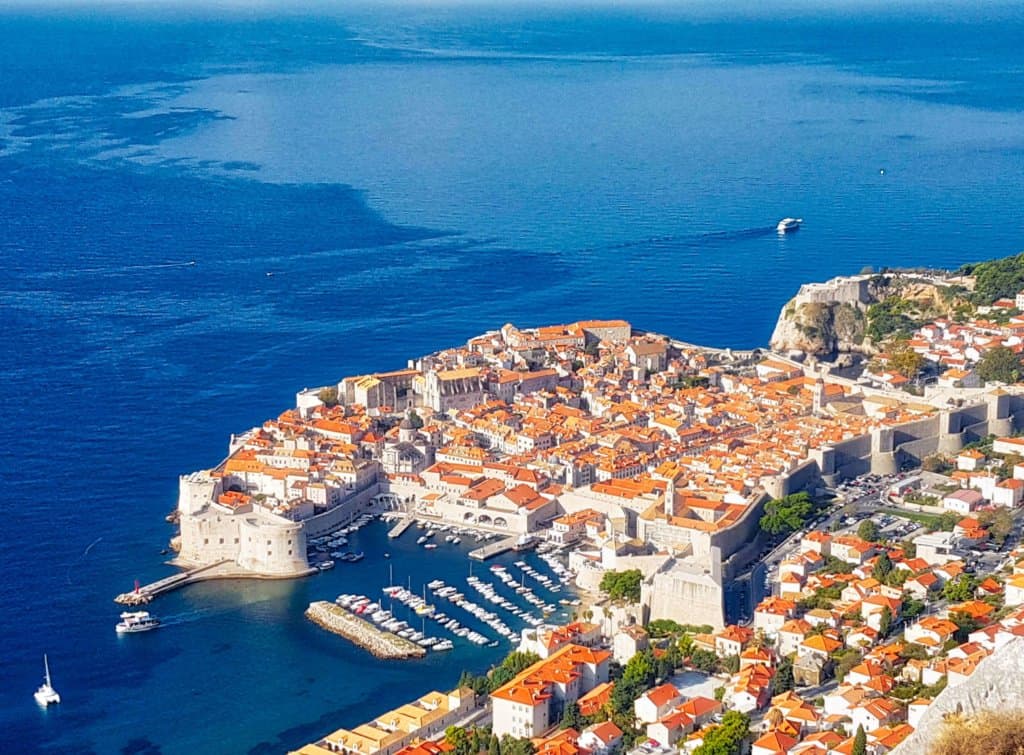
There is no other view so spectacular as arriving into Dubrovnik from the hillside. The picturesque seaside old town offers an amazing view.
Dubrovnik is a well-known destination for Game of Thrones fans wanting to see the locations where the action was filmed. For us, it was to walk yet another medieval city wall.
To avoid the crowds, Dubrovnik’s city wall is best walked early, when the ticket office opens at 8 a.m.
While waiting, we wandered the old city’s cobblestone streets, visiting the famous buildings. You can also take the cable car up to Srd Hill for views over Dubrovnik, or if the queue is too long, there is a pathway to walk.
Here is the website for prices and times ⇒ Dubrovnik Cable Car.
18. Book Island Day Trips from Dubrovnik
From Dubrovnik, you can take a ferry to one or more of the islands close by.
On a day tour, visit the medieval island of Lokrum or the three islands of Kolocep, Lopud, and Sipan.
Mljet National Park on the island of Mljet offers tranquillity with forest walks and saltwater lakes.
Korcula Island is the sixth-largest island in the Adriatic, with beautiful beaches and stunning architecture.
19. Take a Walk around Cavtat
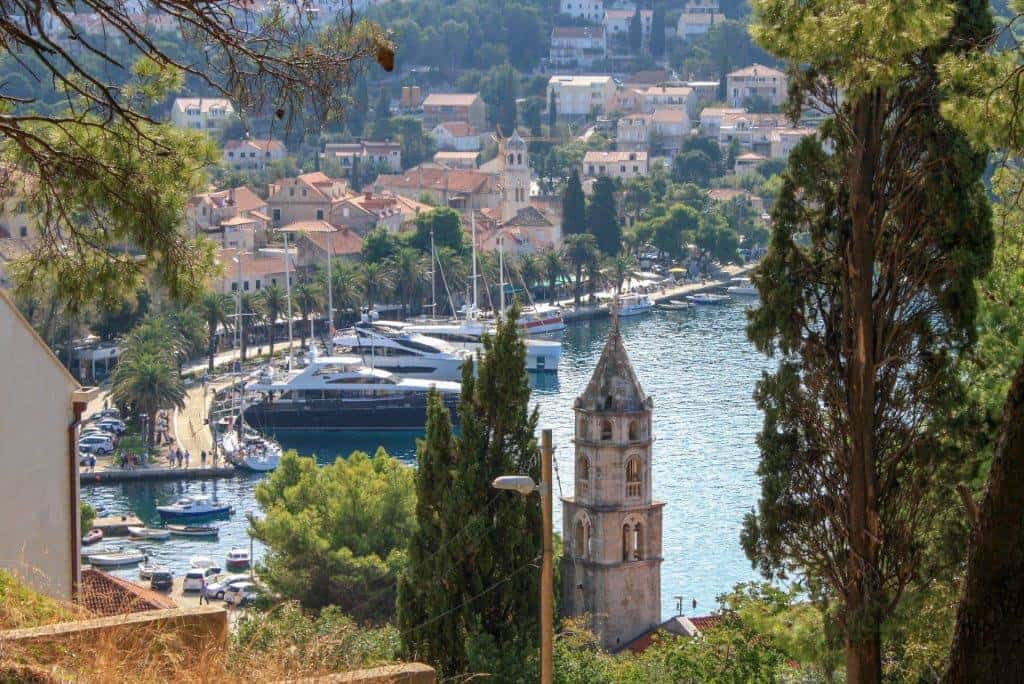
The small town of Cavtat is a small idyllic port with cafes and restaurants away from tourist crowds.
Founded by the Greeks in the 6th century BC, this sheltered harbour makes for a great day trip by ferry from Dubrovnik.
We loved learning more about Cavtat from Map Made Memories.
20. Lunch at Konavle
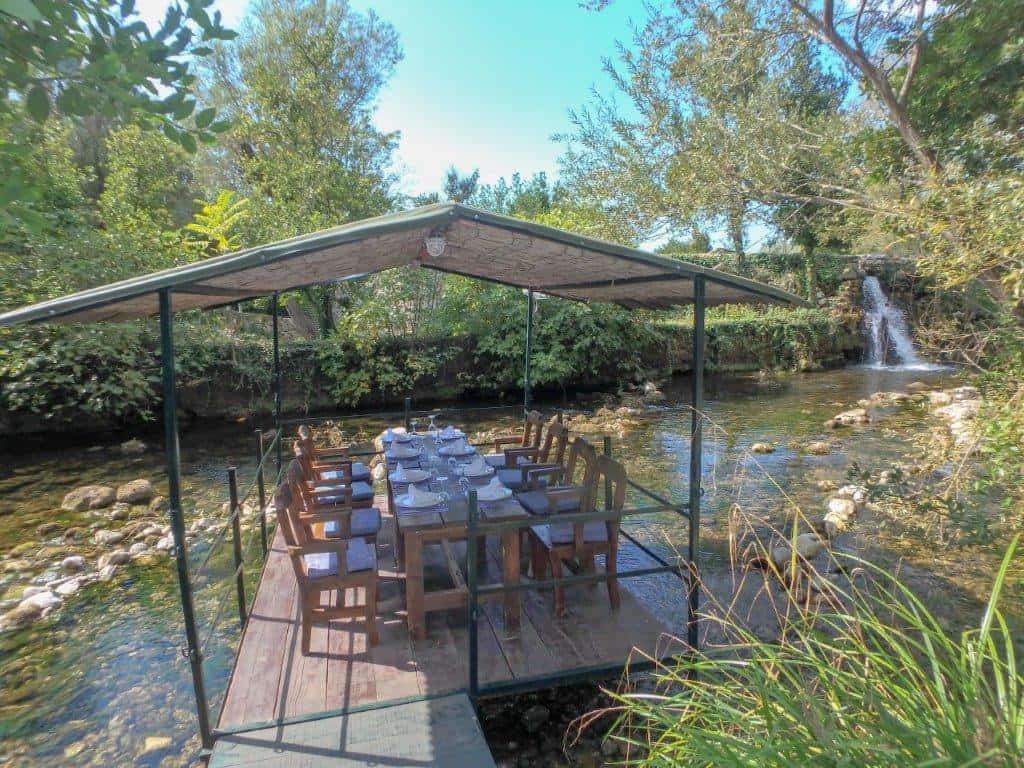
Only a 15-20 minute drive southeast of Dubrovnik’s old town is Konavle.
Often referred to as the “Golden Valley” for its waterfalls and watermills, we had lunch in a tranquil setting at Konoba Vinica Monkovic.
21. Visit Croatia’s capital, Zagreb
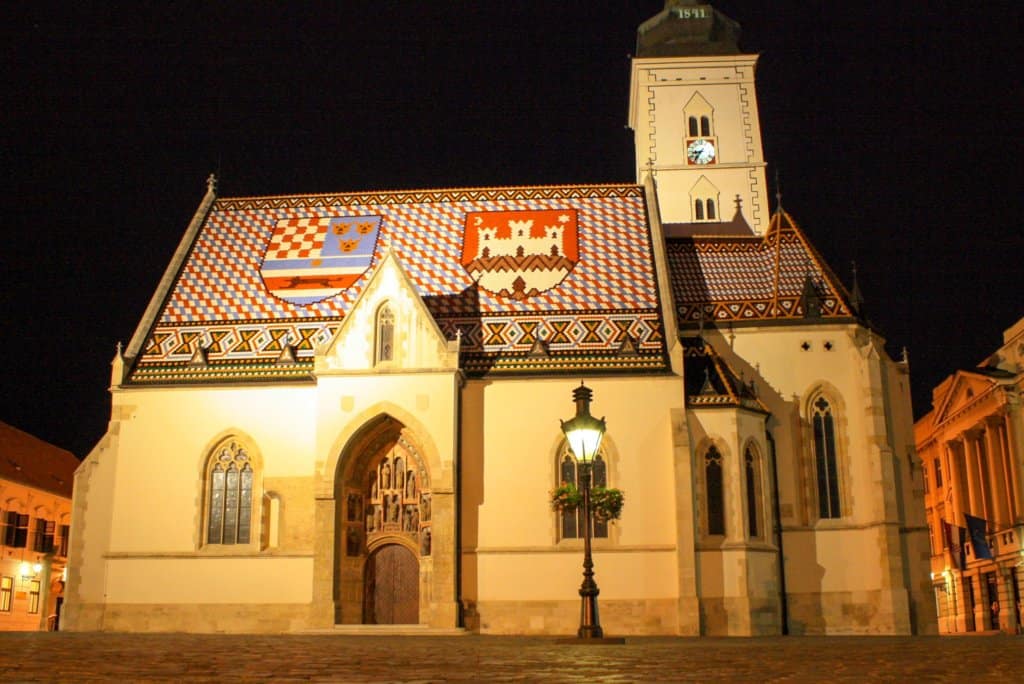
Many travellers choose Dubrovnik as their one and only stop in Croatia, but if you have the time, drive inland to Zagreb, Croatia’s capital.
We have visited a few times, more recently on a return trip from Serbia to Ljubliana.
The old town is beautiful and has an interesting history. The city is easy to navigate and walkable.
22. Enjoy the beaches of the Istria Peninsula
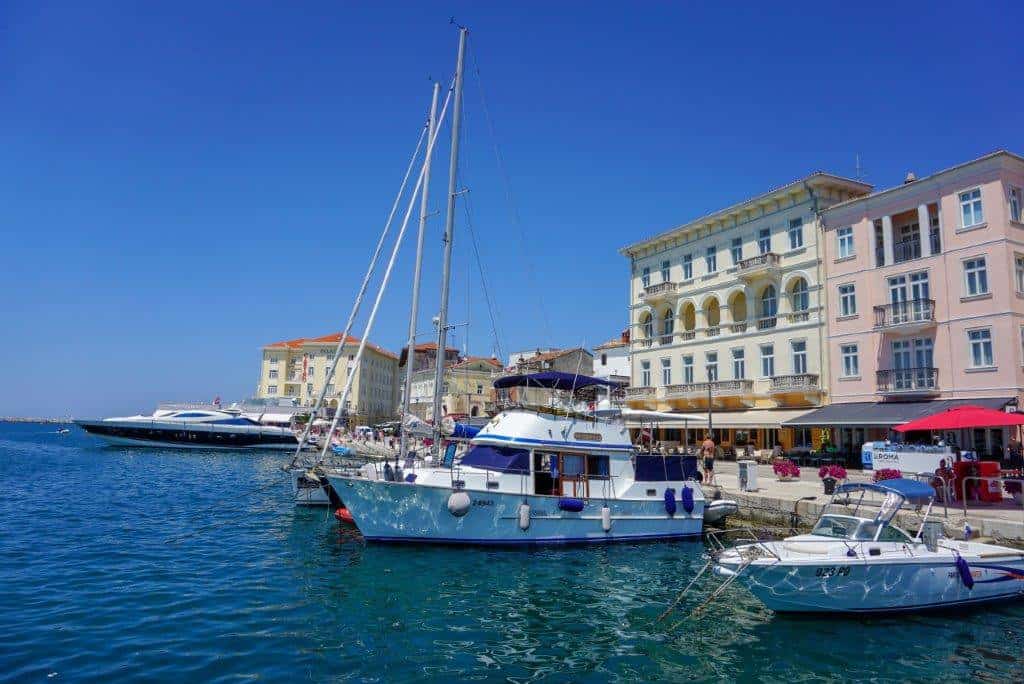
The region of Istria on the Adriatic Sea gave us the feeling of the Mediterranean. With delicious seafood, olives, and wine, we sometimes felt we were perhaps still in Italy.
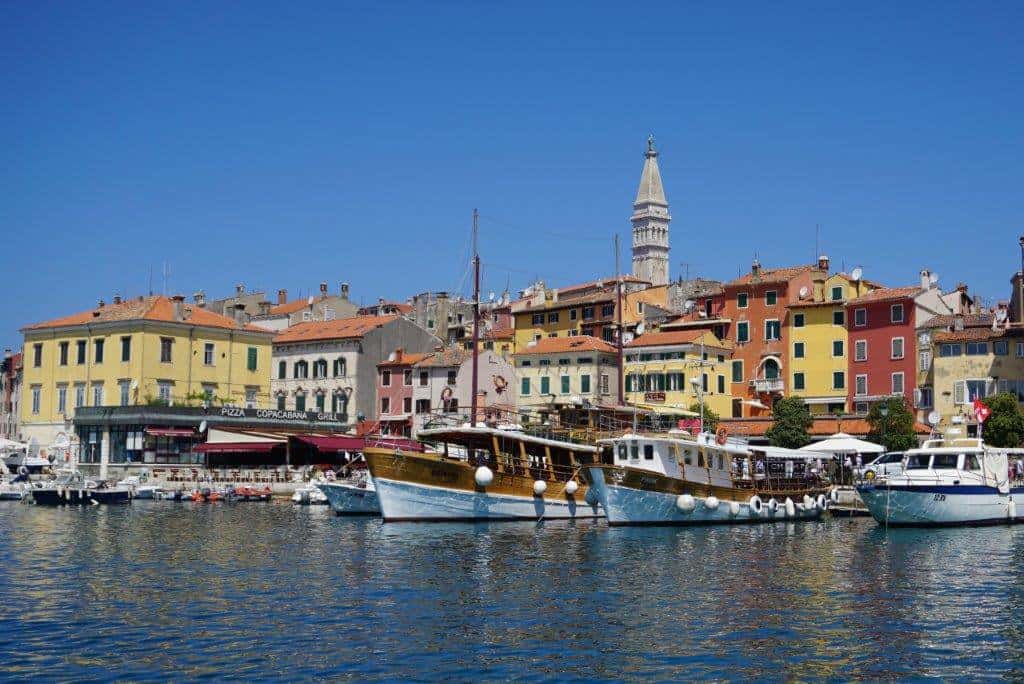
The Charming Towns of the Istria peninsula of Pula, Rovinj, and Porec are along the coastline with amazing beaches to relax and unwind.
If you travel inland, choose a small village surrounded by nature and fields of produce grown for the local markets.
To learn more about the region, check out this website on Istria.
Try Some Local Foods in Croatia
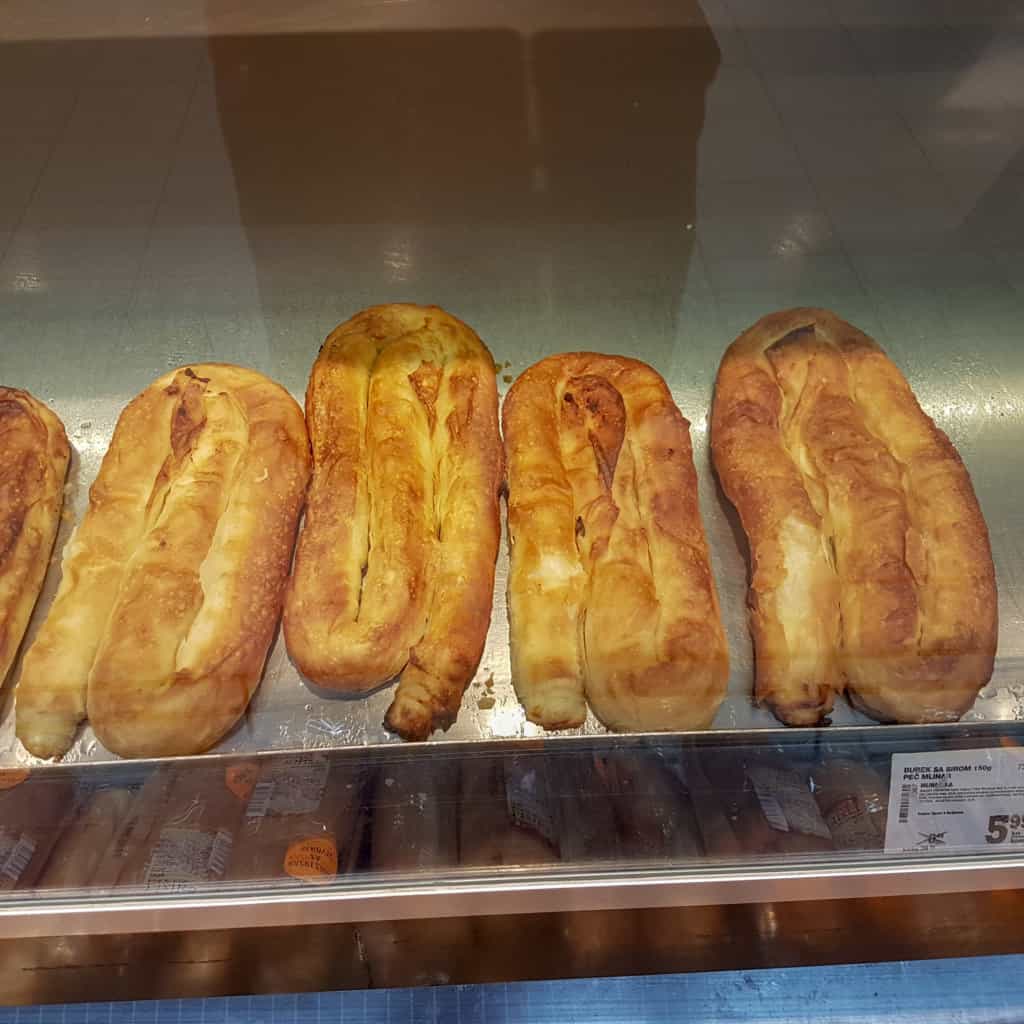
Burek is either filled with cheese or meat and encased in layers of pastry. It is very cheap, easy to share, and great with a salad.
Gilled Calamari – we love seafood, and staying along the coast meant we could eat lots of fresh grilled calamari. It was so delicious.
Cherry Strudel – Filo dough filled with cherries. It’s just perfect with coffee.
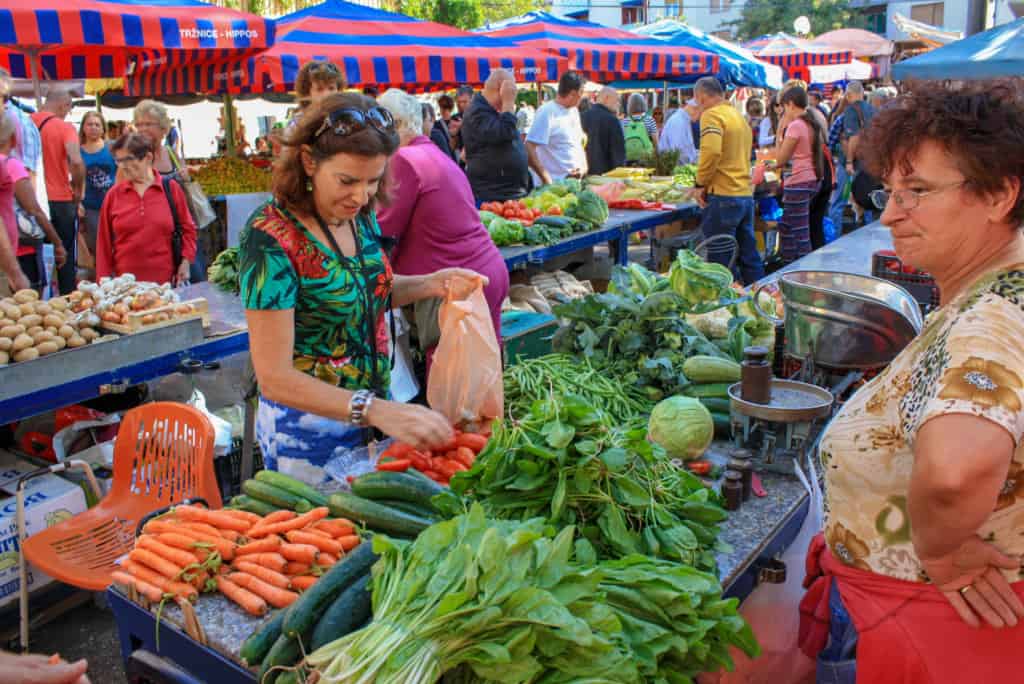
Supermarkets – can be found in even the smallest of towns, with roadside stalls of honey and fruit when in season.
Often, the supermarkets will have small bakeries for bread. (Make sure to try the cornbread.)
The Best Places to Visit for a Road Trip in Croatia
We hope these insights have helped you discover why Croatia is a popular destination.
If you are visiting for the first time, we recommend hiring a car or a driver for a coastal drive.
Our preference for where to stay would be Zadar and Split. You can visit National Parks and some of Croatia’s islands as day trips.
But what is important for your ultimate road trip to Croatia is to plan to stay for at least two weeks.
You won’t get to see it all, but you will want to return to this amazing country.